







Introduction
Let’s be completely honest about something most management colleges will not tell you upfront. The corporate world in 2026 does not just want graduates who can recite theories. It wants managers who can look at a business problem, cut through the noise, ask the right questions, and back their decisions with real evidence. That ability has a name: Business Intelligence Thinking.
This is not a concept reserved for data scientists or IT professionals. Across all industries, this management mindset is quickly rising to the top of the list of competencies. Organisations today run on analytics, customer insights, performance metrics, and predictive decision-making. And they actively seek fresh graduates who already understand how to operate within that environment.
If you are considering a BBA course in Kolkata and wondering what will genuinely set you apart in a competitive job market, this article offers the most honest and up-to-date answer available.
Stay with us, and you will understand exactly why Business Intelligence Thinking is the defining skill of the modern BBA graduate.
Understanding Business Intelligence Thinking in Modern Management
Business Intelligence Thinking is a management competency, not a technical certification. At its core, it refers to the ability of a business professional to gather relevant information about markets, customers, operations, and competitors, and then use that information to make smarter, faster, and more confident decisions.
Traditional management practice relied heavily on experience, intuition, and hierarchical decision structures. That model is not entirely obsolete, but it is clearly insufficient on its own. Modern organisations generate massive volumes of data through every transaction, customer interaction, and operational process. The professionals who know how to extract meaning from that data and translate it into strategic direction are the ones who advance fastest and deliver the most value.
What exactly is Business Intelligence Thinking and why does it matter for management students?
It is the combination of critical analysis, pattern recognition, performance interpretation, and evidence-based problem-solving applied to business decisions at every level. It means understanding why a product is underperforming in a specific market, what a sudden shift in customer behaviour signals about future demand, or how a competitor’s pricing strategy affects your organisation’s revenue trajectory.
According to a survey of business professionals, 94% of organisations rated business intelligence and analytics as either critical or very important to their business success. That figure tells you everything you need to know about where management education must focus. A BBA course in Kolkata that embeds this mindset into its curriculum is preparing students for exactly the professional reality they will encounter from their very first job.
The Transition from Conventional Management to Leadership Driven by Data
Think about how fundamentally business leadership has changed over the last decade. A marketing manager in 2015 largely relied on campaign experience and creative instinct to evaluate strategy. That same role in 2026 requires the ability to read digital engagement analytics, interpret customer segmentation data, evaluate conversion funnels, and make budget decisions backed by performance evidence. The job title is the same. The way of thinking needed is entirely different.
This evolution is not limited to marketing. Finance teams use predictive models to forecast revenue and manage risk. Operations managers use real-time performance dashboards to identify process inefficiencies before they escalate. Supply chain professionals use demand analytics to reduce wastage and optimise inventory. Across every function, the shift from intuition-led management to information-driven leadership is accelerating and shows no sign of reversing.
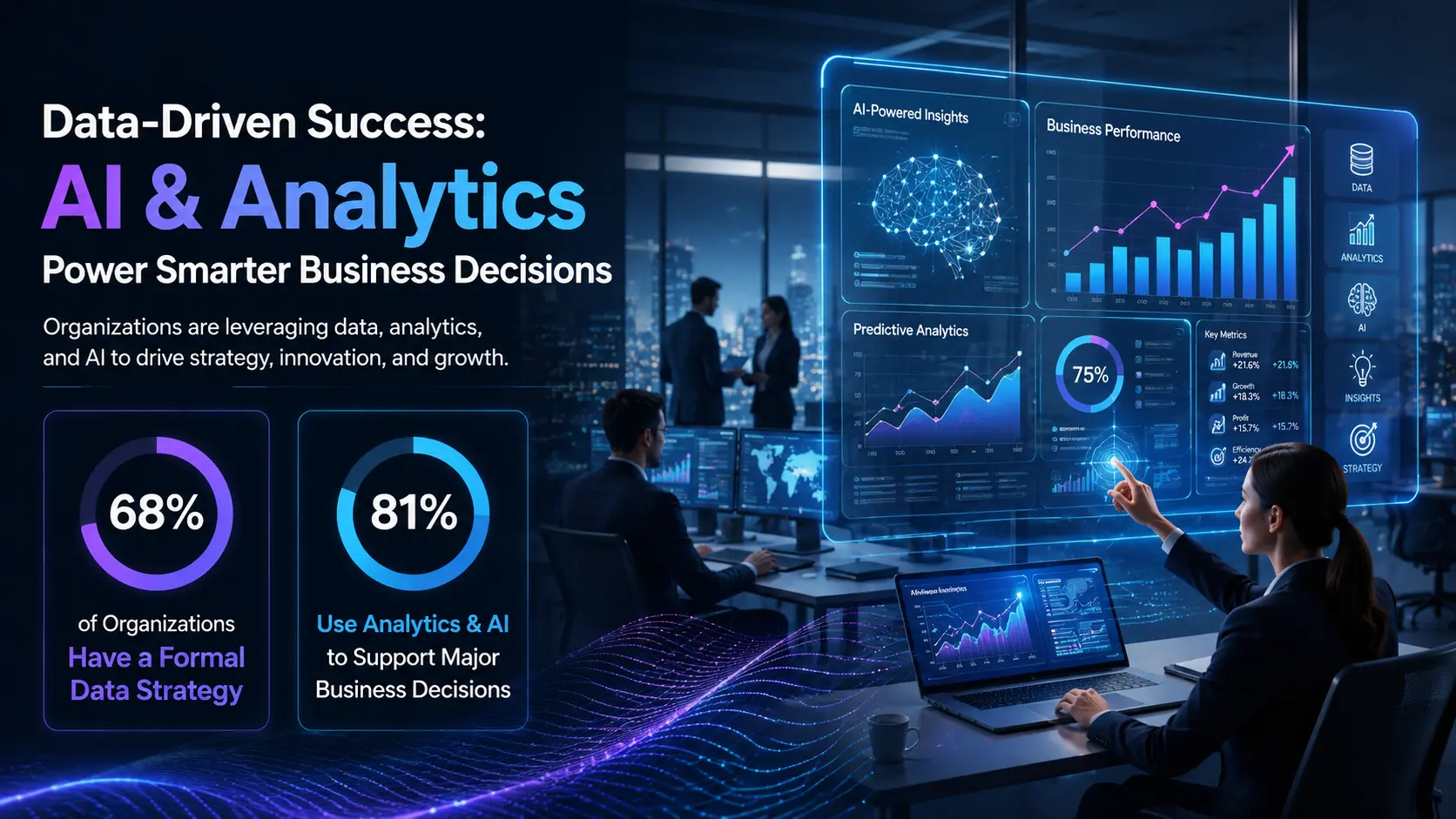
This is the business environment that today’s BBA students are graduating into. The organisations hiring fresh management graduates are already deeply committed to data-driven operating models. They expect their management trainees to arrive with at least a foundational understanding of how information-driven strategic thinking works in practice.
How has management education evolved to meet the demands of today’s data-driven organisations?
The most forward-thinking institutions have recognised that traditional curriculum frameworks built around pure theory are no longer sufficient. They are integrating analytical thinking, business case evaluation, and performance interpretation into the very core of management education, ensuring that graduates are ready to contribute meaningfully from day one rather than spending months catching up on skills they should have built during their degree.
Why Are Business Intelligence Skills Important for BBA Students Today?
This is the question that every prospective management student and every concerned parent needs to think about carefully. The Indian job market for management graduates is competitive and evolving rapidly. Standing out requires more than a degree certificate. It requires demonstrably useful skills that translate directly into organisational value.
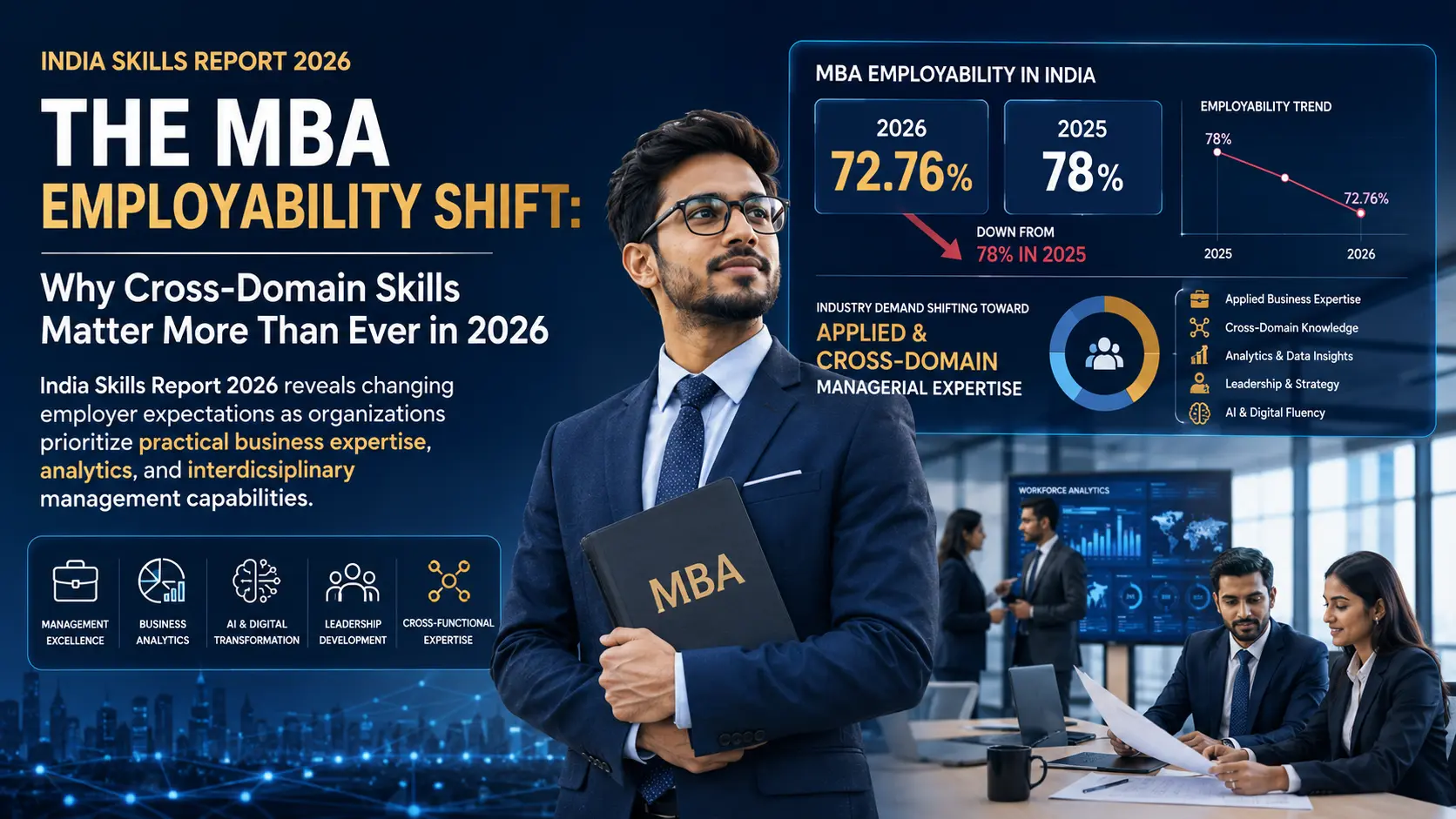
This statistic should wake up every management student in India. Employers are increasingly drawing a sharp distinction between graduates who possess theoretical knowledge and those who can apply that knowledge to real business problems with analytical precision.
In 2026, employers prize graduates who merge business awareness with practical digital know-how, and internships, live projects, and certifications play a crucial role in today’s competitive job market when it comes to employability. Business Intelligence skills directly support this. A student who understands how to analyse market trends, evaluate consumer behaviour patterns, interpret financial performance indicators and draw evidence-based conclusions is far more attractive to a corporate recruiter than someone who can only theorise about management frameworks.
Why do BBA students specifically need business intelligence skills to build successful careers in India?
Because the roles that BBA degree program graduates target most commonly are business development executive, marketing analyst, operations coordinator, management trainee, and financial associate. They all increasingly require the ability to work with business data, interpret performance reports, and contribute to strategy discussions grounded in evidence rather than assumption.
The BBA course in Kolkata at RUNAX Institute recognises this professional reality and actively builds these capabilities into the student experience, giving graduates a measurable advantage from the moment they enter the job market.
How Does a BBA Course in Kolkata Prepare Students for Data-Driven Business Environments?
A well-designed undergraduate business administration program does far more than introduce students to management theory. It builds the intellectual infrastructure that makes a graduate genuinely useful in a professional environment driven by information and strategic thinking.
Modern BBA programs approach this across multiple dimensions simultaneously. Marketing management modules teach students to move beyond traditional four-P frameworks and understand how consumer behaviour data, digital engagement analytics, and competitive intelligence inform campaign strategy and market positioning. Financial management subjects build the ability to read and interpret performance statements, evaluate business health indicators, and make resource allocation recommendations grounded in financial evidence rather than guesswork.
Students today are preparing for a very different business world. The BBA subjects list in 2026 reflects significant changes intended to prepare students for future careers. While traditional management concepts are still important, employers now seek graduates with digital awareness, analytical thinking, and practical business skills. Operations and strategic management subjects expose students to scenario planning, competitive benchmarking, and business performance evaluation frameworks that mirror the analytical processes used in real corporate environments every single day.
RUNAX Institute’s BBA course in Kolkata builds on this foundation by combining academic knowledge with industry-integrated learning approaches that mirror real business challenges. Students do not just learn how information and analytics influence organisational decisions in abstract terms. They actively practice that kind of thinking through structured coursework, case-based learning and practical exposure to real business scenarios, producing graduates who can contribute analytically from their very first day in a professional role.
The Role of Business Analytics in Strategic Decision Making
Every significant business decision carries inherent risk. The managers who consistently make better decisions are not necessarily more experienced or more intuitive. They are better informed. That is the fundamental value proposition of business analytics in management, and it is transforming how organisations plan, compete, and grow.
Companies across every sector now use analytical systems to evaluate product performance against market benchmarks, understand which customer segments generate the highest lifetime value, identify the most effective distribution channels, and forecast demand with enough accuracy to make confident investment decisions. A sales team that understands exactly which geographic regions are underperforming and why can allocate resources far more efficiently than one relying on quarterly gut-check reviews.
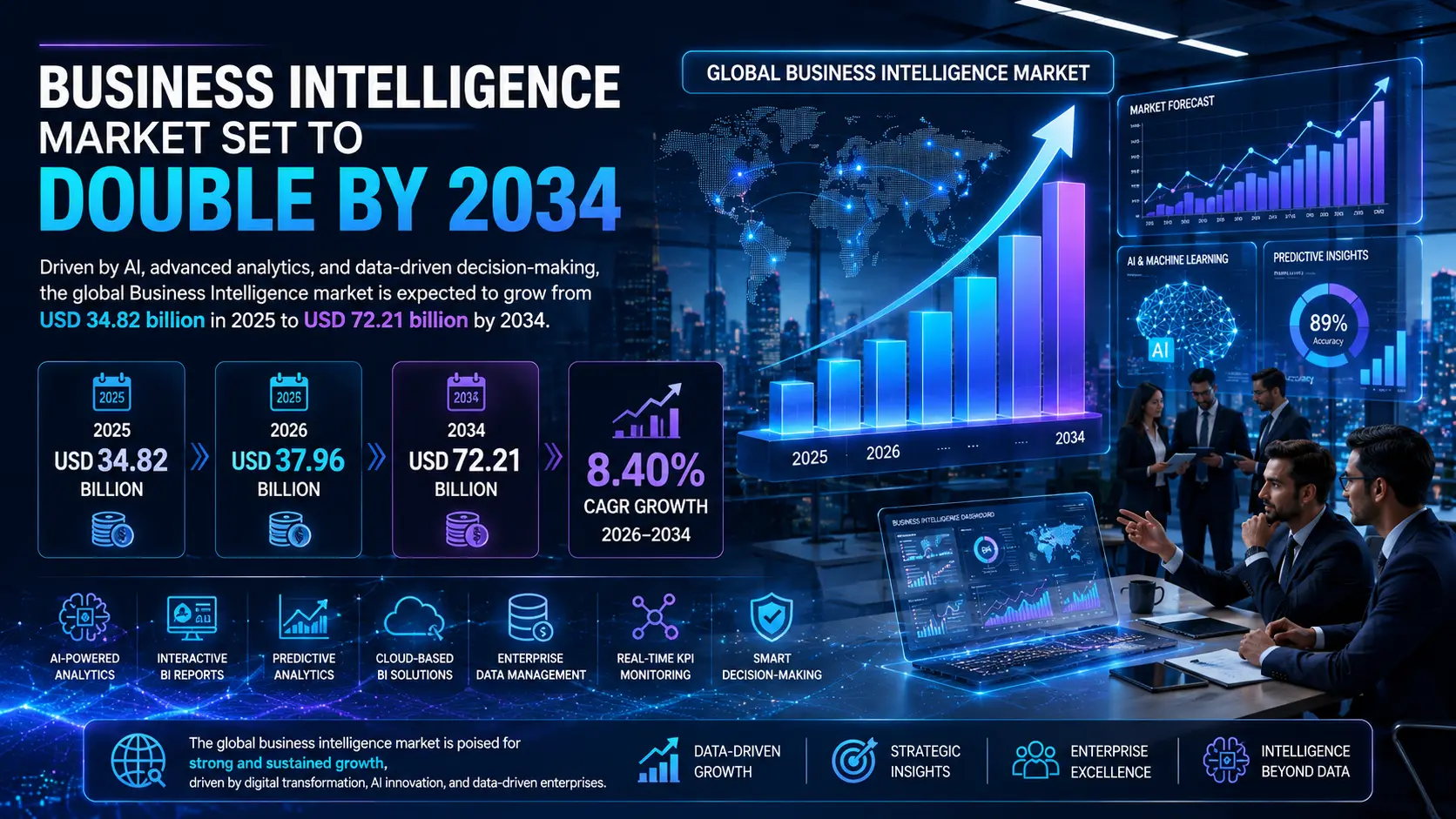
This level of investment signals one thing very clearly. Organisations around the world consider business intelligence capability a core strategic asset, not an optional operational tool. The professionals who understand how to work within analytics-driven environments will be in demand for the foreseeable future, and that demand will only intensify.
How does business analytics directly improve strategic decision-making for management professionals?
It replaces assumption with evidence. It allows managers to evaluate multiple strategic options objectively, model the likely outcomes of different resource allocation choices, and select the path most likely to deliver measurable results. For students pursuing a management education in Kolkata, understanding this relationship between analytics and strategy is not an optional specialisation. It is a professional baseline that separates genuinely competitive graduates from the rest of the field.
Consumer Insights and Market Intelligence in the Digital Economy
Markets in 2026 move faster than most organisations can comfortably keep up with. Consumer preferences evolve rapidly, competitive dynamics shift without warning, and digital channels generate enormous volumes of behavioural data that contain genuinely valuable strategic intelligence. The management professionals who know how to read that environment accurately and act on it decisively are the ones organisations most want to hire and promote.
Market intelligence in management refers to the structured process of gathering, analysing, and applying information about customers, competitors, and broader market conditions to support better business strategy. This includes analysing purchasing behaviour patterns to understand what drives buying decisions, tracking digital engagement metrics to evaluate brand health and campaign effectiveness, monitoring competitor positioning to identify differentiation opportunities, and studying macro-market trends to anticipate shifts in demand before they fully materialise.
Over 85% of Indian enterprises are either experimenting with or actively using AI-based analytics, and nearly 90% of organisations expect artificial intelligence to influence core business decisions within the next three years. This is the Indian business landscape that today’s BBA students will graduate into. Organisations across BFSI, retail, healthcare, manufacturing, logistics, and technology are already building their strategic decisions around consumer behaviour analysis and competitive market research. The management graduates who understand how to work productively within these environments will consistently find relevant and well-compensated career opportunities available to them throughout their professional lives.
A BBA program with industry exposure helps students develop the analytical sensitivity to read markets accurately, understand the evidence behind what customers actually want, and recommend strategies grounded in behavioural insight rather than generalised assumptions. This skill, built during the undergraduate years, pays career dividends for decades.
Developing Analytical Leadership for Future Business Challenges
Leadership has always required vision, communication, and the ability to inspire teams toward shared goals. But modern leadership demands something additional and increasingly non-negotiable. It demands the intellectual confidence to make high-stakes decisions under uncertainty, supported by evidence, evaluated through multiple strategic lenses, and communicated with clarity to stakeholders at every level of an organisation.
This is what analytical leadership in management looks like in practice. It is not about being the most technically skilled person in the room. It is about being the person who consistently makes the most defensible, well-reasoned decisions because they have done the analytical work that earns confidence rather than being assumed. An analytical leader evaluates situations objectively, identifies the real source of a business problem rather than its surface symptom, anticipates risks with enough lead time to prepare, and builds strategies that can withstand scrutiny.
The career outlook for business analysts in 2026 is exceptionally bright, with continued momentum toward data-driven decision-making across industries creating strong demand and compelling opportunities for advancement. This growth reflects a global and Indian corporate shift toward valuing professionals who combine managerial competence with analytical thinking.
BBA graduates who deliberately develop this mindset during their undergraduate years through coursework, practical exposure, and industry-integrated learning enter their careers with a professional maturity that typically takes others several years of work experience to develop. That head start is genuinely valuable in a competitive job market.
Industry Integrated Learning and Practical Business Exposure
There is a significant difference between understanding a business framework in theory and successfully applying it to a real organisational challenge under time pressure. The gap between those two things is where most management graduates struggle in their first professional roles, and it is precisely the gap that strong practical learning is designed to close.
Industry-integrated learning in a BBA program takes many shapes. Business case studies drawn from real organisational decisions challenge students to analyse incomplete information, weigh competing priorities, and arrive at defensible recommendations. Workshops facilitated by working professionals give students direct exposure to how business intelligence actually influences daily decision-making in corporate environments. Live project assignments connected to real market problems require students to move beyond textbook answers and engage with the messy, ambiguous reality of actual business challenges.
Why does practical exposure matter more than ever for BBA students entering the current job market?
Because employers in 2026 are no longer willing to invest the time and resources required to teach foundational analytical thinking to fresh graduates during their first year of employment. BBA graduates in 2026 are no longer limited to traditional marketing and finance-based career options, with analytics, digital platforms, sustainability, and startup culture paving the way for diverse high-growth careers for business graduates. Capturing those opportunities requires practical readiness, not just academic completion.
RUNAX Institute incorporates this understanding directly into its BBA course in Kolkata, embedding practical learning methodologies throughout the curriculum so that students develop genuine confidence in applying analytical thinking to real business challenges well before they step into their first professional role.
How RUNAX Institute Is Preparing Future Business Leaders Through Modern BBA Education
The business world does not pause for graduates to catch up. Organisations want management professionals who arrive ready to think analytically, contribute strategically, and adapt quickly to evolving challenges. Producing that kind of graduate requires a deliberate, future-oriented approach to management education that goes substantially beyond delivering a conventional curriculum.
RUNAX Institute’s approach to the BBA course in Kolkata reflects a clear understanding of what the modern corporate environment actually demands from fresh management graduates. The institution combines foundational management knowledge with a strong emphasis on strategic thinking, leadership development, entrepreneurship, and industry-integrated learning experiences that build both analytical competence and professional confidence simultaneously. Students engage with curriculum frameworks that actively connect academic concepts to real-world business realities rather than treating them as separate and unrelated domains.
What makes a BBA course at RUNAX Institute in Kolkata distinctive for students who want to build genuinely competitive careers?
It lies in the institution’s orientation toward producing graduates who are organizationally useful from day one of their careers. Rather than focusing exclusively on theoretical completeness, RUNAX Institute builds practical business understanding alongside the analytical perspective that modern employers value most highly.
Given that global demand for data production will triple between 2025 and 2029, the need for business intelligence and analytics professionals is expected to grow across industries including healthcare, retail, finance, manufacturing, and education. RUNAX Institute prepares students to be relevant, valuable, and growth-ready within exactly this kind of expanding professional landscape.
Conclusion
The business world has delivered a clear and consistent message to management educators and students alike. Managers with both strategic vision and analytical precision are needed by organisations in India and around the world. They need professionals who can interpret business information, identify meaningful patterns, evaluate options objectively, and drive decisions that can be justified and measured.
Business Intelligence Thinking is not a replacement for strong management fundamentals. It is the upgrade that makes those fundamentals genuinely powerful in the environment that today’s graduates are actually entering.
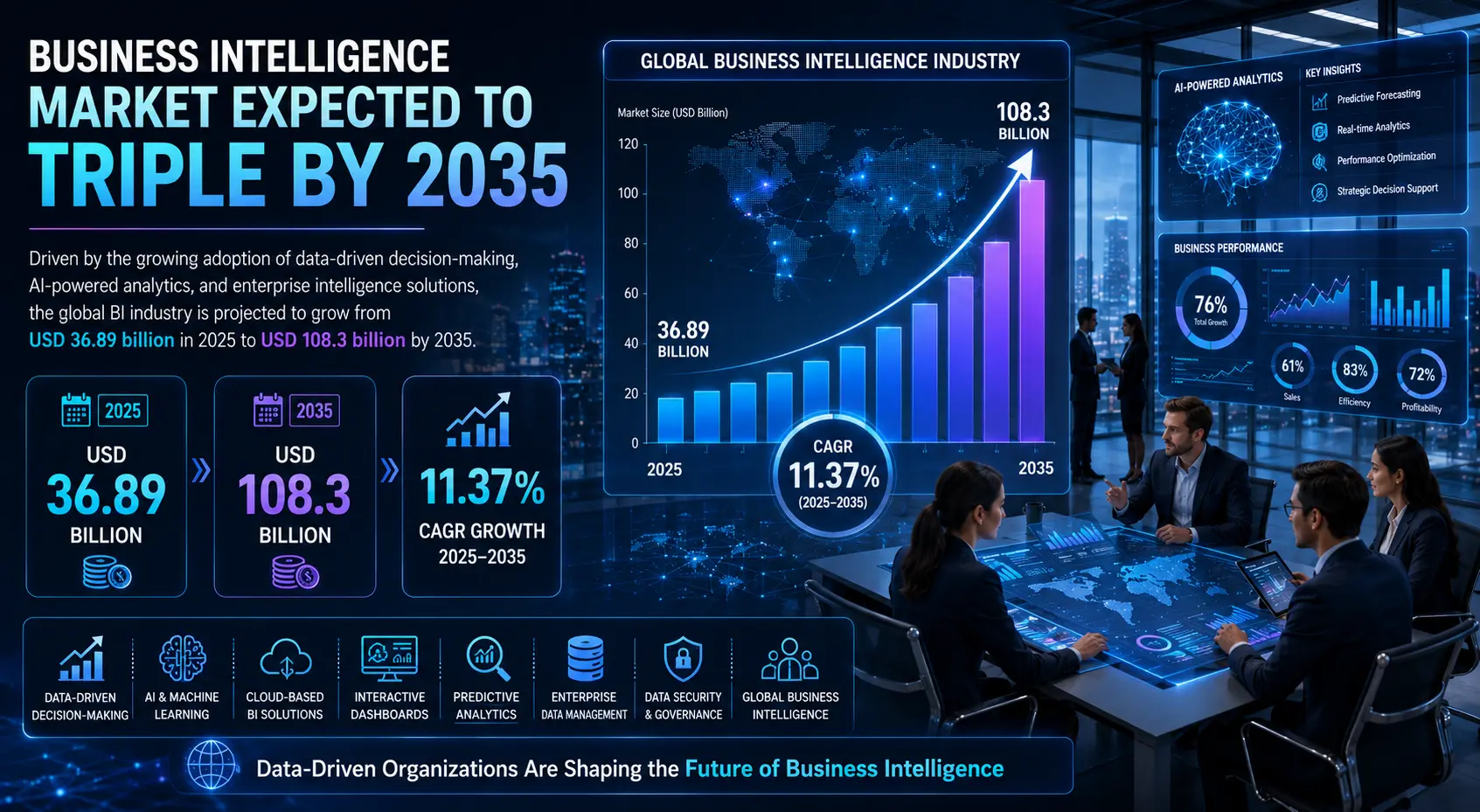
That growth represents a real career opportunity for every management graduate who arrives equipped to contribute within analytics-driven environments.
Choosing the right BBA Colleges in Kolkata is therefore not just an academic decision. It is a professional investment with long-term career implications. RUNAX Institute provides students with the knowledge, practical exposure, analytical business perspective, and leadership capabilities necessary to build sustainable, growth-oriented management careers in an intelligence-driven business landscape. The preparation starts from day one of the program, and the career advantage it creates lasts for a professional lifetime.
Frequently Asked Questions
1. What is Business Intelligence Thinking and why is it important for BBA graduates?
Business Intelligence Thinking is the ability to analyse business data and extract strategic insights. It helps BBA graduates make evidence-based decisions, understand market dynamics, and contribute meaningfully to organisational growth from early career stages.
2. Is a BBA course in Kolkata a good foundation for a career in analytics-driven industries?
Yes. A well-structured BBA program builds analytical thinking, financial interpretation, and strategic reasoning skills that are directly applicable across analytics-driven roles in banking, consulting, retail, and technology sectors.
3. What career opportunities are available for BBA graduates with business intelligence skills?
BBA graduates with strong analytical capabilities can pursue roles in business analysis, marketing analytics, financial advisory, operations management, business development, management consulting, and data-informed strategy across diverse industries.
4. How does RUNAX Institute’s BBA course in Kolkata prepare students for modern corporate environments?
RUNAX Institute produces graduates who are professionally prepared for data-driven business environments by fusing academic management education with industry-integrated practical learning, strategic thinking development, and leadership training.
5. Is business intelligence thinking relevant for BBA students who do not plan to specialise in data science?
Absolutely. Business Intelligence Thinking is a management mindset applicable across all business functions, including marketing, finance, operations, and human resources, making it valuable for every BBA graduate regardless of their chosen career specialisation.