





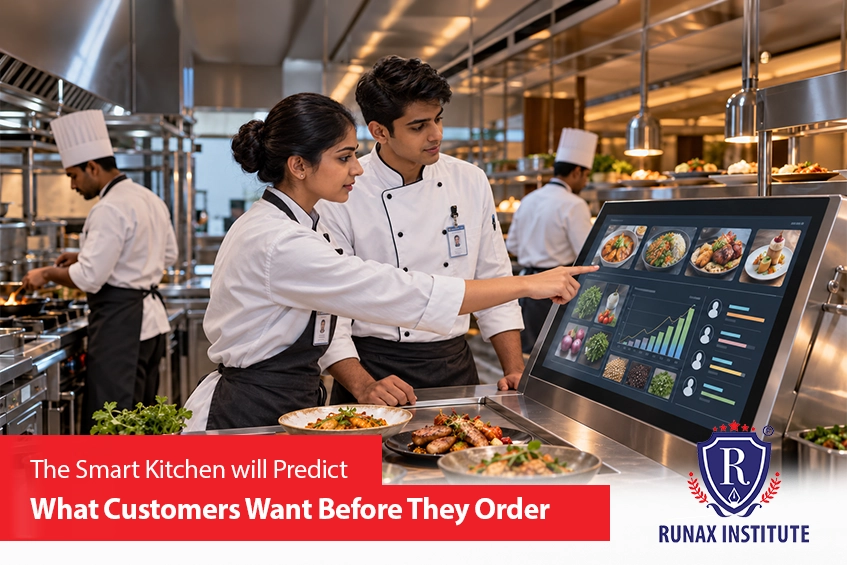
Picture a Saturday night in Kolkata. The dining room fills fast. Your team prepped 40 portions of the signature biryani, but 90 guests want it. Two hours later, the same kitchen throws away trays of unsold starters. Sound familiar? Guesswork drives this daily chaos, and it quietly drains profit.
Many kitchens still plan production from habit, memory, and gut feeling. That approach worked once. It fails today because guest behaviour shifts faster than any chef can track. Overproduction hurts freshness, inflates costs, and burns out staff. Underproduction frustrates guests and loses sales.
Predictive culinary operations offer a smarter path. The kitchen reads sales history, reservations, weather, festivals, and customer behaviour. It then predicts demand before the first orders arrive. This guide explains how that works and why it matters. It also shows which skills tomorrow’s chefs need. Keep reading if you want to understand culinary management in Kolkata at a deeper level and learn what the best culinary management course in Kolkata should teach you.
What Does a Predictive Kitchen Actually Do?
A predictive kitchen treats data like a sous chef. It does not replace cooking. It guides what to cook, how much to cook, and when to start. Many people hear “smart kitchen” and picture connected ovens or voice-controlled fridges. Those tools help, but they remain hardware. The real shift happens in planning.
Predictive analytics studies past patterns and estimates tomorrow’s orders by dish, by hour, and by outlet. What does demand forecasting mean in a restaurant? It is the practice of estimating how many guests will arrive and what they will order, using records instead of instinct. Think of it as a forecast for what your menu will need. A forecast of 120 covers, with 35 per cent choosing vegetarian mains, lets the chef set prep quantities with confidence.
Industry surveys suggest restaurants still waste roughly 4 to 10 per cent of purchased food because of weak forecasting. A predictive kitchen attacks that gap directly. It also strengthens kitchen management by linking purchasing, prep, staffing, and service into one steady rhythm. Students of culinary management in Kolkata now meet these ideas early, because modern employers expect them.
Which Data Signals Help a Kitchen Forecast Demand?
The accuracy of a forecast depends on the quality of the signals behind it. Strong systems blend several sources instead of trusting a single number. Each source adds a different clue about guest behaviour.
Sales History and Reservations
Point of sale records show which dishes sell on which days and at what hour. Reservation books reveal expected covers, party sizes, and special requests. Together, they form the base layer of every demand forecasting model. A kitchen that tracks three months of POS data often spots clear weekday patterns within weeks.
Weather, Festivals, and Local Events
Rain pushes people toward hot soups and home delivery. Heat lifts demand for cold beverages and light salads. In Kolkata, Durga Puja, Poila Baisakh, Christmas, and cricket match days reshape footfall completely. Concerts and exhibitions nearby create sudden rushes. A smart system tags these dates, then compares them with last year’s numbers.
Customer Behaviour
Loyalty apps, online orders, and review trends reveal repeat favourites and ordering habits. A guest who orders mutton kosha every second Sunday becomes a predictable data point. Add many such guests together, and customer behaviour becomes a practical guide for menu engineering and prep planning.
How Does Predictive Preparation Improve Freshness?
Freshness depends on timing. Food prepared too early loses texture, colour, and flavour. Food prepared too late slows service. Predictive preparation fixes this balance. It tells the team how much to batch cook and when to start each batch.
Take a lunch buffet. The forecast may show a peak between 1:00 and 2:00 pm and a dip afterwards. The chef then schedules small, frequent batches of rice and curries instead of one large morning cook. Guests receive hotter, fresher plates. Herbs, sauces, and garnishes follow the same logic.
This approach also supports food safety and shelf-life management. Ingredients spend less time in holding temperatures. Fresh produce moves through inventory management faster, and the first in, first out rule works more reliably.
Can predictive forecasting really improve food quality? Yes, because quality problems often start with surplus and delay. Fewer leftovers mean fewer reheated dishes and fewer complaints. Chefs still taste, adjust, and use judgement. The forecast simply provides them with a more informed starting point. A well-trained culinary professional learns to read both the pan and the dashboard.
How Does Predictive Production Reduce Overproduction and Food Waste?
Waste is a global problem, and the numbers are sobering. A 2024 global food waste report estimated that approximately 1.05 billion tonnes of food were wasted worldwide in 2022, representing nearly 19% of all food produced. India ranked second among the biggest contributors, with household waste near 78 million tonnes and about 55 kg per person each year. Food loss and waste also create 8 to 10 per cent of global greenhouse gas emissions.
Kitchens can shrink their share. A 2026 industry analysis reports that AI demand forecasting cuts restaurant food waste by 30 to 50 per cent compared with manual estimation, depending on the starting level of overordering. The same analysis notes that overpreparation often causes more waste than overordering. Another review found an average 14.8 per cent drop in food waste per store when AI tools guided a grocery program. A 50-store pizza brand reported 18 per cent less food waste and 22 per cent fewer spoiled premium ingredients.
How does AI reduce food waste in restaurants? It matches prep and purchasing to predicted demand. It flags stock nearing expiry and suggests portion adjustments. This drives real food waste reduction and supports sustainability targets, which many hotels and caterers now track closely.
How Do Predictive Kitchens Control Costs?
Every wasted portion carries ingredient, labour, and energy costs. Predictive planning attacks all three. Case studies from a restaurant software provider report food cost reductions of 15 to 25 per cent. A European pilot across multi-unit restaurants reported food cost cuts of up to 6 per cent and staff cost savings of 5 to 15 per cent. Results vary by kitchen, so treat these as ranges and not promises.
Better forecasts also improve labour scheduling. You avoid idle cooks on slow afternoons and thin lines at peak hours. Food cost control improves too, because supplier orders match real consumption and emergency purchases at higher prices drop.
| Area | Guesswork Kitchen | Predictive Kitchen |
| Prep quantity | Habit and memory | Hourly forecast by dish |
| Purchasing | Fixed weekly orders | Orders based on expected demand |
| Staffing | Same roster every day | Roster based on expected covers |
| Waste tracking | Occasional checks | Daily records by category |
What Skills Will Future Chefs and Managers Need?
Tomorrow’s kitchen leaders will cook well and read numbers calmly. They will not become data scientists, but they must ask smart questions of a dashboard. A forecasting tool fed with messy records produces weak results. Reports show that kitchens connecting forecasting software to unaudited sales data see poorer waste outcomes in the first 60 days. Clean data is now a kitchen skill.
Future professionals should build these abilities.
- Reading sales reports and spotting patterns by day, hour, and dish
- Recipe costing, yield analysis, and portion management
- Tracking waste by category, such as production, spoilage, and plate waste
- Understanding forecast error and adjusting plans when reality differs
- Negotiating with suppliers using demand-based order data
Soft skills still matter just as much. A chef must explain the forecast to the team, motivate them, and protect quality during a rush. Hospitality leadership, clear communication, and creativity keep a data-supported kitchen humane. This blend of culinary arts and data literacy defines the modern food and beverage management career.
How Do You Choose the Best Culinary Management Course in Kolkata?
Kolkata has a rich food culture and a growing hotel, catering, and cloud kitchen sector. That makes it a strong city to train in. Still, not every programme prepares you for a predictive kitchen. Look beyond brochures and check what students actually practice.
Use this checklist when you compare options for the best culinary management course in Kolkata.
- A curriculum that blends cooking skills, kitchen management, and food costing
- Exposure to POS dashboards, inventory tools, and waste tracking methods
- Well-equipped food production and food and beverage labs for live practice
- Internships with hotels, restaurants, and catering businesses
- Faculty with real kitchen and management experience
- Strong placement support and career guidance
- Modules on sustainability and responsible sourcing
Ask each institute how it teaches forecasting and cost control. A confident answer shows they understand where the industry is heading. Visit the labs, meet the faculty, and speak with current students before you decide.
In Conclusion
The smart kitchen is not about shiny gadgets. It is about planning with evidence. Predictive culinary operations use sales history, reservations, weather, festivals, local events, and customer behaviour to forecast demand. That forecast improves freshness, because food gets cooked closer to the moment guests want it. It reduces overproduction, because prep quantities match real needs. It also controls costs, because purchasing and staffing follow demand instead of habit.
The numbers support this shift. Waste remains a huge global and Indian challenge, and forecasting tools already deliver reductions ranging from about 15 per cent to 50 per cent in reported cases. Chefs will not lose their craft. They will gain a sharper tool to protect it.
Future culinary professionals need both skills. They must cook with confidence and read data with curiosity. If you want a rewarding career in culinary management in Kolkata, choose a programme that teaches both. The kitchens of tomorrow will hire people who can predict, prepare, and perform.
Start Your Culinary Management Journey at RUNAX Institute of Hotel Management
Ready to build a kitchen career that blends craft with smart planning? RUNAX Institute of Hotel Management offers a dedicated Culinary Management programme in Kolkata. Students train on a large campus at Baligori, Newtown, with a Food Production Lab and a Food & Beverage Lab for hands-on practice. The institute highlights placement support, scholarships, and educational loan options. Admissions are open for 2026- 27.
Do not wait for the next batch to fill up. Visit: www.runaxinstitute.com to explore the course and apply online. You can also call 8961629333 or email admission@runaxinstitute.com to speak with the admissions team. Take the first step today and learn how to cook, manage, and predict like a modern culinary leader.
Frequently Asked Questions (FAQs)
1. What is a smart kitchen in simple terms?
A smart kitchen uses data and connected tools to plan production. It forecasts demand, guides prep quantities, tracks waste, and helps managers control cost, instead of relying only on habit or guesswork.
2. How do kitchens predict what customers will order?
Kitchens study past sales, reservations, weather, festivals, local events, and customer habits. Forecasting software combines these signals to estimate orders by dish and by hour, so teams prepare the right quantities.
3. Can predictive planning really reduce food waste?
Yes. Reported results range from about 15 to 50 per cent less waste, depending on the kitchen and its starting habits. Accurate prep forecasting matters most, because over-preparation causes major losses.
4. Do chefs need data skills in 2026?
Yes. Chefs do not need advanced coding, but they must read sales reports, track waste, and question forecasts. These skills sit alongside cooking, costing, and team leadership in modern kitchens.
5. What should a good culinary management course in Kolkata include?
Look for hands-on kitchen labs, food costing, inventory and waste tracking, exposure to POS dashboards, strong internships, experienced faculty, and placement support that matches current industry needs.