






Picture this. A guest books a premium suite online, pays by card, and promises to arrive at midnight. Your front desk team is tired, the lobby is busy, and the check-in feels routine. Three weeks later, the real cardholder disputes the charge. The room is gone, the revenue is gone, and nobody can prove who actually slept there.
This story is no longer rare. Hotels now handle digital reservations, online payments, and remote check-ins every hour. Each step creates a new door for fraud. Skip verification, and you risk chargebacks, stolen identities, legal trouble, and angry guests. Add too many checks, and you annoy honest travellers at the worst moment.
This guide shows a smarter balance. You will learn how digital identity works, how to spot suspicious bookings, and how to build smooth guest verification workflows. You will also see why every student of a hospitality management course in Kolkata now needs these skills alongside traditional reception training.
What Do Digital Identity and Guest Verification Mean for a Hotel?
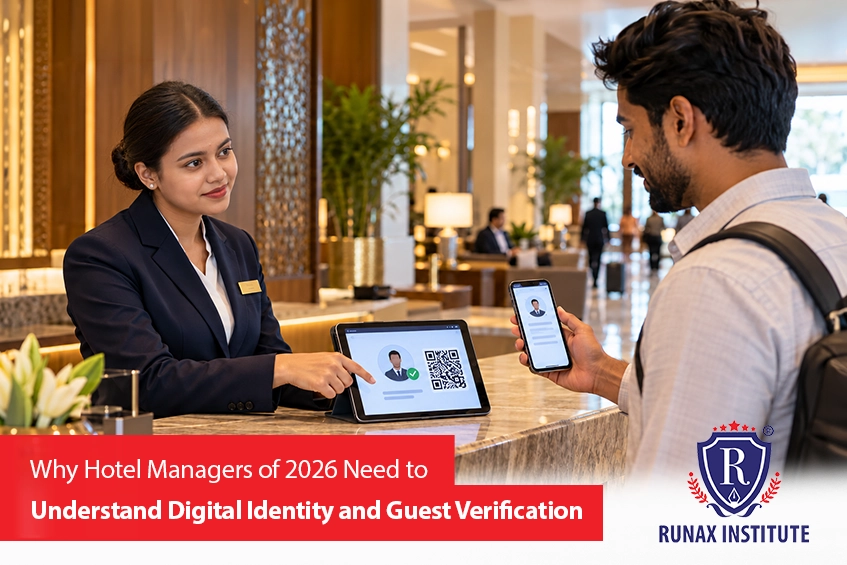
Digital identity is the online proof that a person is who they claim to be. It can include a government ID scan, a live selfie, a verified phone number, a confirmed email address, and a matching payment card. Guest verification is the hotel process that checks these proofs and links them to a reservation.
What is guest identity verification in a hotel? It is the process of confirming that the person booking, paying, and staying is the same real person before the hotel hands over a room key. Older hotels did this only at the front desk, with a glance at a paper ID. That method belongs to a different era.
Today, the guest journey starts long before arrival. A traveller searches online, books through an app, pays digitally, and often checks in by phone. Each touchpoint leaves a data trail. A strong front office team learns to read that trail. They treat identity as a chain of small signals, not a single document. Managers who understand this chain make better decisions about when to approve, when to ask for more proof, and when to stop a booking entirely.
Why Can Hotel Managers of 2026 Not Ignore Identity Risk?
Fraud has changed shape. A 2026 industry review warns that card-not-present fraud, synthetic identity attacks, loyalty account takeover, and chargeback abuse are becoming more automated. Hotel groups and operators now rely on AI-driven fraud prevention to keep up. Big events add fuel. Analysts tracking the 2026 global football tournament noted that fraud follows attention, because demand concentrates and travellers book across borders in a hurry.
The legal side matters too. India notified its Digital Personal Data Protection Rules in November 2025, with full obligations arriving by May 2027. The law allows penalties of up to Rs 250 crore for failing to apply reasonable security safeguards. Hotels collect passports, Aadhaar-based details, phone numbers, and payment data every day. That makes them serious data fiduciaries.
Why does guest verification matter now? It protects revenue from chargebacks, protects guests from stolen accounts, and protects the hotel from legal penalties. It also protects reputation. One fraud story on social media can undo years of good reviews. Smart managers treat verification as a service quality issue, not just a security task.
How Does Reservation Fraud Actually Show Up?
Fraudsters rarely look suspicious. They look like busy, polite travellers. Knowing the common patterns helps your team react early.
Stolen and Synthetic Identities
Some fraudsters use stolen IDs and cards. Others build synthetic identities by mixing real data with invented details. These profiles can pass shallow checks, which is why a basic ID glance at the counter often fails. A layered check that compares document, selfie, phone, and payment details catches far more.
Fake Listings and Payment Scams
Scammers copy real property photos, create fake listings, and intercept bookings. Hotels also face chargeback abuse, where a guest stays and then disputes the payment. Clear records of identity, consent, and check-in time help hotels defend these claims.
Suspicious Booking Patterns
Watch for patterns, not single events. These red flags deserve a second look.
- Last-minute reservations for premium suites using prepaid cards issued by third parties.
- Mismatched names between the booker, the card, and the arriving guest
- Many bookings from one email, device, or phone number
- Unusual requests to change dates, rooms, or payment methods repeatedly
- Addresses that do not exist or do not match the card’s billing details
How Can Hotels Verify Guests Without Slowing Check-In?
Speed and safety can live together. A July 2026 industry analysis suggests that much of hotel booking fraud can be detected early by verifying the address, email, phone number, and identity information guests submit when making a reservation. Waiting until check-in leaves a gap, because the guest is already standing at the counter and the pressure to hurry is high.
A layered approach works best. Pre-arrival checks handle most guests quietly. Only unusual cases need extra attention. Done well, digital verification adds seconds to the process, not minutes.
| Method | Strength | Limitation |
| Manual ID check at the desk | Familiar and personal | Slow, easy to fool, no digital record |
| Mobile document scan before arrival | Fast and scalable | Needs good lighting and a working phone |
| Selfie with liveness check | Links the face to the document | Some guests dislike sharing biometrics |
| Email, phone, and address checks | Catches fake contact details early | Cannot prove the person’s face |
How can hotels verify guests without annoying them? Offer a mobile-first option, explain why you need each item, and keep a friendly human alternative for guests who prefer the desk. A calm, clear message such as “this keeps your booking safe” works better than a stern demand. Good check-in experience design respects the guest while protecting the property.
What Is Data Minimisation and Why Does It Matter in Hotels?
Data minimisation means collecting only the information you truly need, and keeping it only as long as you need it. Many hotels still make photocopies of identification documents, keep them in shared folders, and leave them stored for years without reviewing them. That habit creates a treasure chest for hackers and a compliance headache for managers.
India’s data protection rules push hotels toward better habits. Organisations must give standalone, clear notices that explain why they collect each piece of personal data. They must apply reasonable safeguards such as encryption and access controls. They must also report breaches properly. Penalties scale with the severity of the failure, which makes poor storage a costly mistake.
Practical steps help managers stay safe.
- Gather only the information necessary for legal compliance, payment processing, and safety.
- Explain the purpose in plain language at the point of collection
- Restrict access, so only trained staff can view identity documents
- Set a retention schedule and delete data when the period ends
- Use secure systems instead of personal phones, emails, or messaging apps
Does stronger verification mean collecting more data? Not at all. Smart verification confirms identity with fewer, better signals. A hotel that stores less data also loses less data during a breach. That makes data privacy a hospitality skill, not just an IT concern.
What Should Front Office Escalation Procedures Look Like?
Even the best system flags doubtful cases. Staff then need a calm, clear path. Without one, they either allow high-risk guests to proceed or offend genuine guests. A good escalation procedure removes guesswork and protects both people and property.
Start with simple tiers. A receptionist handles routine checks and notes any mismatch. A duty manager reviews flagged cases, calls the guest if needed, and requests extra proof. Security or senior management steps in for serious concerns, such as forged documents or aggressive behaviour. Everyone should understand who makes the decisions and how quickly they are made.
Strong teams follow a short checklist.
- Pause politely and avoid accusing the guest
- Ask for a second form of proof or a call back to the booking contact
- Record what happened in the property management system
- Inform the duty manager before refusing a room
- Report confirmed fraud to the payment provider and, where required, to the authorities
Training matters as much as technology. Role-play sessions help staff practice tough conversations. A confident, respectful tone turns a tense moment into a professional one. Honest guests understand security when you explain it kindly. Hotels also need clear rules for foreign guests, because immigration regulations require proper identification and reporting. Front desk training should cover those duties in detail.
How Does a Hospitality Management Course in Kolkata Prepare You for This?
Traditional reception skills still matter. Greeting guests, handling keys, and managing complaints build the foundation. Yet modern hotels also need people who understand systems, risk, and regulation. A strong hospitality management course in Kolkata should connect these worlds.
Look for a hospitality management college in Kolkata that teaches the following areas.
- Front office operations with property management system practice
- Reservation management and revenue protection basics
- Guest data handling and privacy awareness
- Payment security, chargebacks, and basic fraud detection
- Customer communication and conflict handling
- Legal requirements for guest registration and reporting
Kolkata’s hotel industry serves business travellers, tourists, pilgrims, and international visitors. That mix creates rich learning chances, because students see many guest types and many verification needs. Internships add real exposure to check-in desks, reservation teams, and security routines.
Students who master both people skills and technology-aware service stand out in interviews. Employers want managers who can protect the property and still make guests smile. That balance defines the hotel management career of 2026.
In a Nutshell
Digital identity and guest verification have moved from the back office to the centre of hotel management. Online bookings, digital payments, and remote check-ins make life easier for guests, but they also open new paths for fraud. Stolen identities, synthetic profiles, fake listings, and chargeback abuse now arrive in automated waves, especially during big events.
Strong hotels respond with layers. They verify email, phone, address, and identity early. They watch for suspicious booking patterns. They offer fast mobile check-in, plus a friendly human option. They gather minimal data, keep it secure, and comply with India’s new data protection obligations, which impose penalties of up to Rs 250 crore for serious violations.
Clear escalation procedures turn staff into confident decision makers. Respectful communication keeps honest guests comfortable. Managers who combine security awareness with warm hospitality protect revenue, reputation, and trust at the same time.
If you aspire to lead a hotel in this evolving era, opt for training that combines front desk skills with digital awareness. A forward-looking hospitality management course in Kolkata gives you that edge and prepares you for the front desk of tomorrow.
Build a Secure Hospitality Career with RUNAX Institute of Hotel Management
Lead hotels that guests trust. RUNAX Institute of Hotel Management offers hospitality education in Kolkata at its Excellence Campus in Baligori, Newtown. The institute focuses on hands-on learning, placement support, scholarships, and educational loan options. Admissions are open for 2026- 27.
Explore the available programmes and apply online at RUNAX Institute of Hotel Management. You can also reach the admissions team by calling 8961629333 or emailing admission@runaxinstitute.com for further assistance. Start your journey today and learn how to welcome guests warmly while protecting every booking with confidence.
Frequently Asked Questions (FAQs)
1. What is guest identity verification in a hotel?
It is the process of confirming that the person booking, paying, and staying is a real individual. Hotels compare ID documents, contact details, and payment information before releasing a room or key.
2. How can hotels detect reservation fraud early?
Hotels should verify email, phone, address, and identity at booking. They should also watch for mismatched names, repeated bookings from one contact, last-minute high-value reservations, and frequent payment changes.
3. Does verifying guests delay the check-in process?
Not when done well. Pre-arrival mobile checks handle most guests quietly, so the desk only reviews unusual cases. Clear communication and a personal assistance option ensure a smooth and welcoming experience.
4. Why does data minimisation matter for hotels?
Collecting less data reduces risk during breaches and supports India’s data protection rules. Hotels should gather only needed details, explain the purpose clearly, store them securely, and delete them on schedule.
5. What should students look for in a hospitality management course in Kolkata?
Look for front office training, reservation management, payment security basics, data privacy awareness, legal reporting knowledge, and strong internships. These skills prepare you for technology-aware hotel operations.