





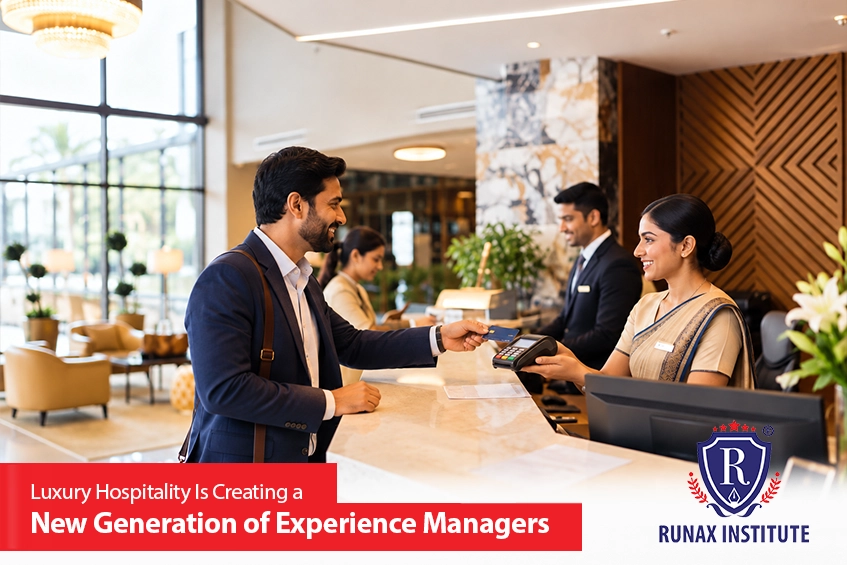
A guest walks into a luxury property expecting more than a clean room and a comfortable bed. They expect the staff to remember their coffee order, anticipate their dinner reservation, and somehow know they’d love a spa slot before they even ask for one.
That’s the new bar for luxury hospitality, and honestly, most hotels are still scrambling to meet it. If you’ve been researching a hospitality management college in Kolkata, you’ve probably noticed how much the industry has shifted from selling rooms to selling experiences. Miss this shift, and you risk training for a career that no longer exists in its old form.
Stick around, because this blog breaks down exactly how luxury hotels are building experience management into every department, and why understanding guest psychology now matters as much as knowing how to fold a napkin correctly.
From Selling Rooms to Selling Memories
Luxury hospitality used to mean thread count, marble lobbies, and a bellhop who called you by name. That formula still matters, but it’s no longer enough on its own. Today’s luxury hotel market is being reshaped by travellers who want more than opulence; they want stories, culture, and stays that feel personally designed for them.
The Shift Toward Experience-Led Luxury
India’s luxury hotel market reached approximately USD 3.6 billion in 2025 and is projected to grow at a CAGR of over 11% through 2031, according to Mordor Intelligence. That kind of growth doesn’t happen just because hotels added more gold trim to their lobbies. It’s happening because affluent travellers are prioritising personalised service and cultural immersion over pure opulence. What is experience management in luxury hospitality? It is the deliberate design of every guest touchpoint, from check-in to checkout, so that each interaction feels tailored rather than templated. A rising ultra-high-net-worth population in India, expected to grow by over 50% by 2028, is fueling demand for exactly this kind of curated, experience-driven stay.
Why Guests No Longer Just Want a Room
Modern luxury guests want wellness retreats, immersive dining, and stays that reflect local culture rather than generic five-star sameness. Business hotels still account for roughly 41% of India’s luxury hotel market, but resorts are growing faster, at over 13% CAGR, precisely because leisure travellers want curated experiences money alone can’t buy off a shelf.
Guest Profiling: The Quiet Engine Behind Personalised Service
Nobody sees this part of the operation, but it’s the reason a returning guest feels instantly recognised. Guest profiling works quietly behind the scenes, turning scattered preferences into a system that makes every stay feel familiar.
How Hotels Build Detailed Guest Preference Systems
Luxury properties now maintain detailed guest profiles tracking dietary restrictions, room temperature preferences, pillow choices, and even preferred newspaper. How do luxury hotels personalise guest experiences? They rely on systems that quietly log every interaction and preference, then feed that data back to staff before the guest even arrives. A guest who mentioned loving jasmine tea during a stay in Udaipur should find that same detail waiting for them at a sister property in Goa. That kind of continuity separates a five-star stay from a genuinely luxurious one, and it’s a core part of modern hotel operations.
The Human Layer Behind the Data
Technology stores the preferences, but people deliver them with warmth. A guest profile is useless if the concierge operations team reading it doesn’t know how to translate a data point into a thoughtful gesture. This is where hospitality management courses become critical, because software can flag a preference, but only trained staff can turn that flag into a genuinely memorable moment without making it feel scripted or invasive.
Anticipatory Service: Solving Problems Before Guests Notice Them
Reactive service fixes problems. Anticipatory service prevents them from happening in the first place, and that distinction defines luxury today. This section breaks down what it actually looks like on the ground and how staff are trained to deliver it.
What Anticipatory Service Actually Looks Like
It means housekeeping restocking a minibar before a guest realises it’s empty. It means the spa team proactively suggesting a treatment based on a guest’s travel fatigue rather than waiting for a request. What is anticipatory service in hospitality? It is the practice of identifying and meeting a guest’s needs before they voice them, using subtle cues like body language, tone, and small comments dropped during check-in, a skill set closely tied to guest psychology.
Training Staff to Read Guests, Not Just Serve Them
This skill doesn’t come naturally to everyone, and it’s rarely taught in traditional service modules focused purely on procedure. Hospitality programs that incorporate guest psychology alongside standard operating procedures produce staff who can genuinely anticipate needs instead of mechanically following a checklist. That distinction increasingly separates top-performing luxury properties from the rest of the market.
Premium Dining and the Rise of Curated Culinary Experiences
Dining at a luxury property has become theatre, storytelling, and hospitality all rolled into one plate. This section looks at why premium dining is now treated as a revenue driver rather than a background amenity.
Why F&B Now Drives a Bigger Share of Luxury Revenue
International guests spend significantly more on food and beverage, spa, and curated experiences than on room rates alone, pushing luxury hotels to treat dining as a profit centre rather than an amenity. Why is F&B so important in luxury hotels? Because it now directly drives guest satisfaction and property revenue, especially as India’s booming destination wedding and MICE demand pushes boutique luxury venues to expand event capabilities and monetise experience-led F&B offerings through 2026.
Curated Menus as Storytelling Tools
Menus increasingly reflect regional ingredients, local farming partnerships, and cultural narratives rather than generic international fare. A guest dining at a luxury property in Kolkata might now find a menu built around Bengali culinary heritage rather than a copy-paste continental spread, because that authenticity is exactly what today’s luxury traveller is chasing.
Wellness Integration: No Longer an Add-On, But a Core Offering
Spa treatments used to be optional. Now they’re central to how luxury properties define their identity, and this shift has real implications for how wellness tourism is being built into hotel design.
Wellness as a Primary Booking Driver
Why is wellness tourism growing in luxury hospitality? Guests increasingly choose properties based on wellness programming rather than treating a spa visit as an afterthought. India’s coastal regulation liberalisation has opened up more beachfront and wellness-oriented resort development, feeding directly into this experience-led demand curve.
Designing Wellness Journeys, Not Just Spa Menus
Leading properties now build multi-day wellness journeys combining nutrition, fitness, and spa treatments tailored to individual guest goals. This requires coordination across F&B, spa, and front office teams working from a shared guest profile, another example of why departmental silos are becoming a liability in modern luxury operations.
Concierge Operations and the Art of Curated Itineraries
The concierge desk has quietly become one of the most strategically important roles in a luxury property. This section explores how the role has evolved well beyond simple restaurant bookings.
Beyond Restaurant Recommendations
Today’s concierge teams design entire personalised itineraries, private art tours, chef’s table experiences, and cultural immersion excursions, based on a guest’s stated interests and past behaviour. What skills do future hospitality managers need for luxury service? Strong local knowledge, cultural fluency, and the ability to coordinate across multiple external vendors while keeping the guest journey seamless from start to finish.
Coordinating Experiences Across Departments
The spa, food and drink, transportation, and an outside tour operator might all be included in a single guest’s schedule, which would be managed by a single concierge desk. Managing that complexity without dropping a single detail requires operational discipline that goes well beyond traditional front-desk training.
The Management Infrastructure Behind Consistent Luxury Delivery
None of this works without strong cross-departmental coordination holding it all together. This section explains why consistency, not just innovation, is the real test of a luxury property.
Why Consistency Is Harder Than Innovation
Creating one unforgettable experience is achievable. Delivering that same standard consistently across every guest, every shift, every season is the real challenge luxury properties face. This is where trained experience managers step in, professionals who understand operations across departments well enough to spot where a guest journey might break down before it actually does.
The Rise of the Dedicated Experience Manager Role
Major hotel groups expanding aggressively across India, including significant luxury portfolio growth from established Indian and international chains, are increasingly creating dedicated experience management roles that sit above individual departments. These professionals oversee guest journey design holistically, rather than leaving personalisation to chance within isolated departmental silos.
Why Hospitality Students Need This Skill Set Now
The job market is shifting faster than many training programs have caught up with, and this section connects that shift directly to what students should be learning today.
Blending Traditional Hotel Administration with Experience Design
A lot of people wonder, “Is hospitality management still relevant in the age of automation? Yes, arguably more relevant than ever, because automation handles logistics while human staff handle the emotional, personalised layer guests actually remember. Students entering hospitality careers need traditional operational grounding in front office, housekeeping, and food and beverage, layered with newer skills in guest psychology, service design, and cross-departmental coordination.
Building Careers Aligned with Where Luxury Is Heading
International luxury brands are rapidly expanding their Indian footprint and even pushing into Tier II and Tier III cities, so demand for professionals who understand experience management is only going to grow. Students who build this multidisciplinary foundation early position themselves for roles that didn’t formally exist a decade ago.
In a Nutshell
Luxury hospitality has moved far beyond marble floors and premium linens. It’s now about guest profiling, anticipatory service, curated dining, wellness journeys, and seamless concierge operations, all held together by management infrastructure that ensures consistency across every department.
India’s luxury hotel market is expanding fast, driven by rising affluence and a hunger for authentic, personalised experiences rather than generic opulence. For anyone evaluating a hospitality management college in Kolkata, this shift matters because tomorrow’s luxury hospitality careers will reward professionals who understand both operations and guest psychology.
The hotels winning this decade aren’t just selling stays. They’re selling memories, and someone has to be trained to design them.
Join RUNAX Institute of Hotel Management for a Future in Experience-Led Hospitality.
If luxury hospitality is moving toward personalised, experience-driven service, your education should prepare you for exactly that shift. RUNAX Institute of Hotel Management offers training that blends core hospitality management courses with the operational depth needed to understand guest psychology, cross-departmental coordination, and experience design. Whether you’re drawn to concierge operations, premium F&B, or wellness hospitality, building a strong operational foundation now sets you up for the roles luxury hotels are actively creating. Visit runaxinstitute.com to explore programs designed around where the industry is actually heading, not where it used to be.
Frequently Asked Questions (FAQs)
1. What makes luxury hospitality different from standard hotel service today?
Luxury hospitality now centres on personalisation, anticipatory service, and curated experiences rather than just premium amenities, requiring deeper guest psychology and cross-departmental coordination skills.
2. How is guest profiling used in luxury hotels?
Hotels track detailed guest preferences, dietary needs, room settings, and past interactions to deliver consistent, personalised service across properties and repeat stays.
3. Why is wellness becoming central to luxury hospitality?
Guests increasingly choose properties based on wellness programming, driving hotels to design multi-day wellness journeys rather than offering spa treatments as a simple add-on.
4. What role does a concierge play in modern luxury hotels?
Concierge teams now design full personalised itineraries and coordinate across departments and external vendors, going far beyond traditional restaurant or transport recommendations.
5. Why should hospitality students learn experience management skills?
Luxury hotels are creating dedicated experience management roles, so students who understand guest psychology alongside operations are better positioned for emerging career opportunities.