







Introduction
Software is no longer code running on a single machine. Today, it breathes, connects, learns, and scales across cloud environments, enterprise platforms, mobile devices, and real-time data networks simultaneously. This shift has fundamentally changed what it means to work in technology and, more importantly, what it means to study it.
Traditional computer application education was largely built around isolated programming knowledge. You learned a language, built an application, and called it a day. That world does not exist anymore. Modern businesses run on interconnected software ecosystems where applications talk to each other, databases power real-time decisions, and cloud-native applications replace physical infrastructure at a pace that would genuinely surprise you.
What does this mean for students pursuing a BCA course in Kolkata?
It means that education must evolve just as fast as the technology does. RUNAX Institute of Hotel Management understands this shift deeply, offering a BCA course in Kolkata that prepares students to work within, manage, and contribute to the intelligent software ecosystems that define today’s digital economy.
Understanding the Rise of Intelligent Software Ecosystems
Intelligent software ecosystems are not a futuristic concept. They are already the operational backbone of virtually every industry functioning at scale today. An intelligent software ecosystem is a network of interconnected platforms, cloud services, databases, automation tools, and application interfaces that work together seamlessly to deliver technology solutions at speed and scale.
What exactly makes a software ecosystem intelligent?
It is the ability of the system to learn from data, adapt to usage patterns, automate repetitive processes, and integrate with other platforms without requiring constant human intervention. A mobile banking app that processes a transaction, triggers a fraud alert, updates a database, sends a notification, and logs the event for compliance, all within milliseconds, is an intelligent software ecosystem at work.
The cloud market hit $855.7 billion in 2025, growing at an 18.91 per cent CAGR, with public cloud end-user spending climbing to $723.4 billion, up 21.4 per cent from 2024. This explosive growth tells students one critical thing clearly: people who understand these ecosystems, not just isolated programs but entire interconnected software architectures, will be the most valuable technology professionals over the next decade. RUNAX Institute builds exactly this understanding into its computer applications degree curriculum from the very first year.
How Modern Businesses Depend on Connected Technology Platforms?
Ask any technology leader at a mid-size Indian company what their infrastructure looks like today, and the answer will involve at least a dozen different platforms constantly communicating with each other. Modern organisations combine enterprise software architecture, customer relationship tools, supply chain systems, cloud storage, analytics dashboards, and digital communication platforms into one unified operating environment.
This is not just a large enterprise phenomenon. Even a mid-size retail business in Kolkata today runs an inventory system connected to a billing platform, which feeds into an analytics dashboard, which syncs with an e-commerce storefront, which connects to a logistics API. Every single one of those connections requires technology professionals who understand how software systems integrate, communicate, and depend on each other.
Cloud-native architectures reached a 74 per cent enterprise adoption rate in 2026, moving from an emerging capability to an operational reality that technical leaders must integrate into delivery roadmaps, staffing plans, and platform strategies. This means today’s technology professionals must understand cloud architecture, on-premises systems, and the bridges connecting them simultaneously. This is not optional knowledge anymore. It is baseline competency for anyone entering a technology role.
Students pursuing a BCA course in Kolkata at RUNAX Institute gain foundational exposure to these connected technology environments early in their academic journey. The curriculum does not treat programming as an isolated subject. It connects programming knowledge to networking, database systems, and software integration principles from day one.
The Shift From Traditional Programming to Ecosystem-Based Development
Here is something no one mentions to students when they first enrol in a computer applications program: writing code is roughly 20 per cent of the job. The rest involves understanding where that code lives, how it connects to other systems, how it handles data, who else is contributing to it, and how it gets deployed, monitored, and updated within a live production environment.
Why has software development moved so far beyond traditional programming?
Because modern applications simply do not work in isolation. A mobile app needs a backend API. That API connects to a database. That database feeds a reporting tool. That reporting tool integrates with a business intelligence platform. A developer who only knows how to write the front-end application but cannot understand the surrounding ecosystem is like someone who can bake a single loaf of bread but has no idea how a bakery actually functions.
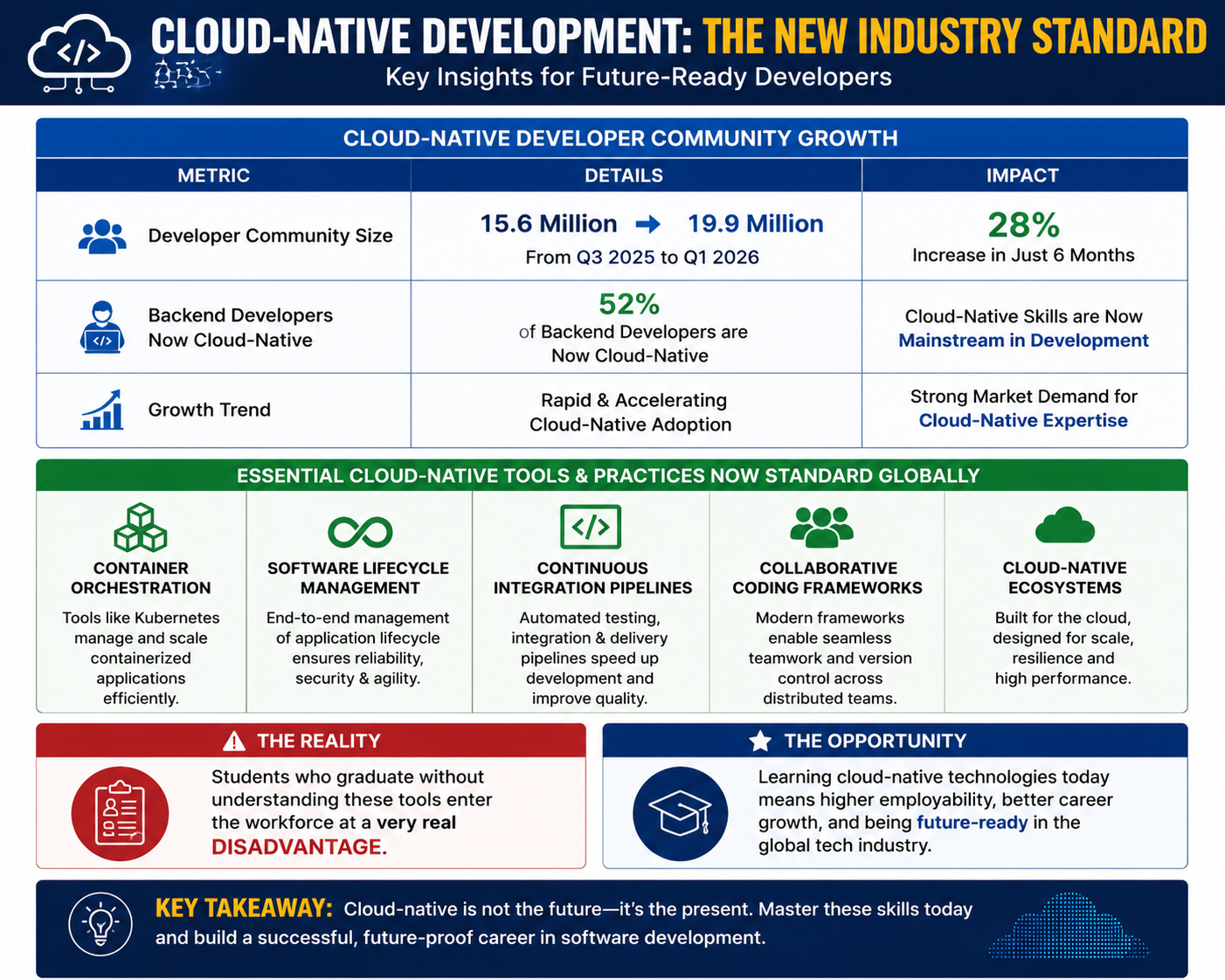
RUNAX Institute bridges this gap by ensuring that BCA students do not just learn to write code. They learn how code fits into larger technology systems, how development teams collaborate on shared codebases, and how modern integrated development environments support the full software lifecycle from design to deployment.
Why Are Intelligent Software Ecosystems Becoming Essential for BCA Students?
This is the question every student exploring a technology career should be asking right now. The honest answer is simple. Intelligent software ecosystems are no longer the domain of senior engineers or enterprise architects alone. Entry-level technology professionals are expected to understand these environments from day one of their careers.
Total IT job demand in India reached 1.8 million roles in 2025, marking a 16 per cent rise over the previous year, with more than half of all hires focused on emerging digital skills while legacy technology roles dropped to under 10 per cent of overall demand. This is both a warning and a massive opportunity. The warning is that graduates trained only in legacy programming approaches will increasingly struggle to match employer expectations. The opportunity is that students who graduate with ecosystem-level technical knowledge will find themselves in extraordinary demand across every sector.
What specific roles does ecosystem knowledge prepare BCA graduates for?
The answer covers an impressive range. Software development, IT consulting, database administration, systems analysis, cloud support engineering, and application integration management all require professionals who understand how software platforms interact, depend on each other, and scale under real-world conditions. RUNAX Institute’s BCA program introduces students to these practical technology concepts in a structured, industry-aligned way that builds genuine career readiness rather than just academic familiarity.
How Does a BCA Course in Kolkata Prepare Students for Intelligent Technology Environments?
A well-designed BCA course does not just teach programming languages. It builds a complete technology foundation that prepares students to understand, work within, and contribute to modern software ecosystems at a professional level. The difference between a BCA graduate who lands a strong first role and one who struggles to find their footing is almost always a question of practical, ecosystem-aware education versus purely theoretical instruction.
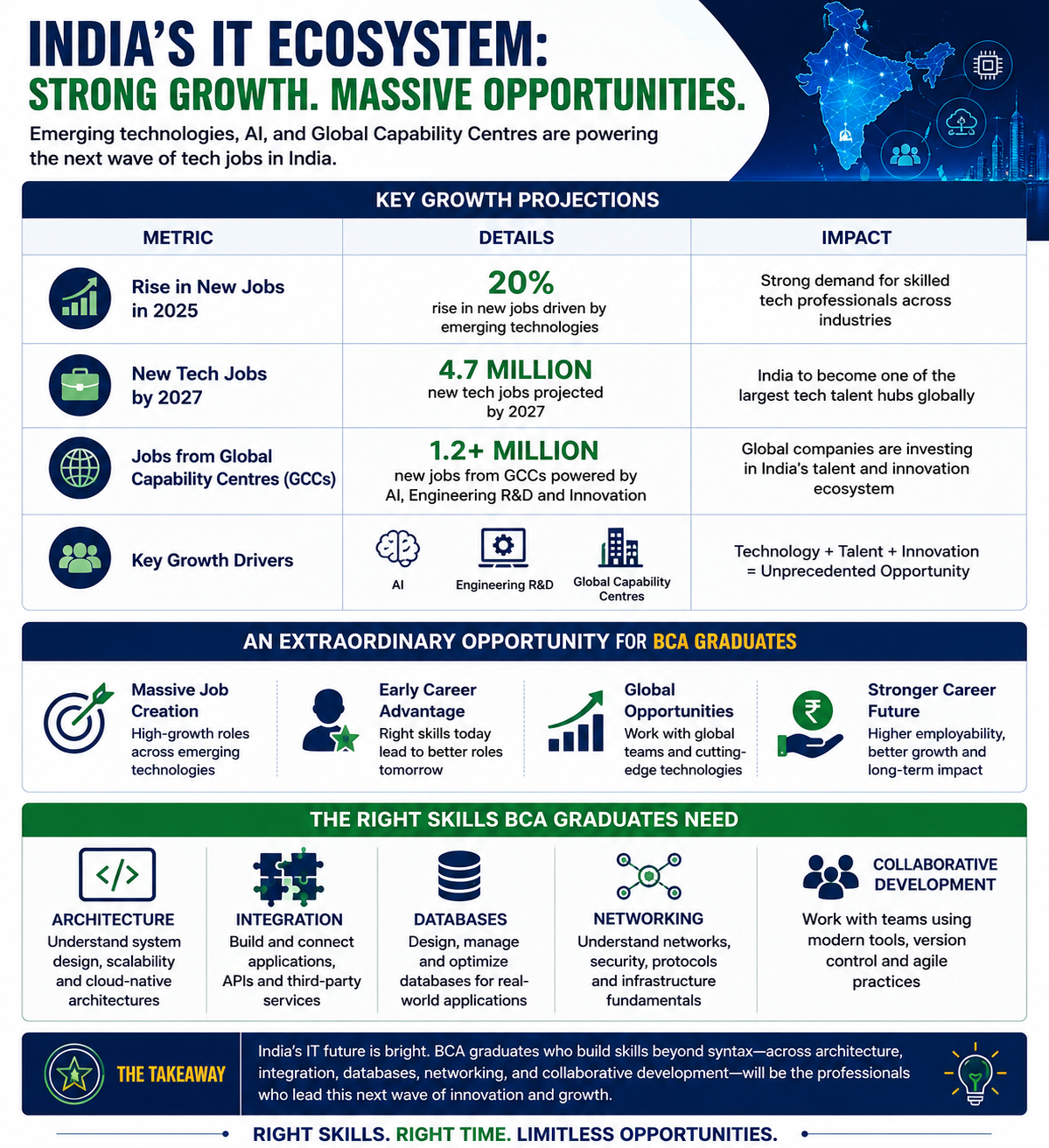
RUNAX Institute combines academic instruction with mentoring, practical exposure, and structured skill-building experiences designed to help students develop real confidence in working with interconnected digital systems. The institute ensures that computer applications education goes beyond textbook programming and genuinely prepares students for the complexity of professional technology environments.
The Importance of Database Intelligence in Software Ecosystems
If software ecosystems are cities, databases are the roads. Everything depends on them. Every application, every cloud platform, every analytics dashboard, and every customer interaction ultimately reads from or writes to a database. Any IT professional entering the workforce today needs to know how databases function, how to design them effectively, how to query them wisely, and how to safeguard the data they contain.
Why is database knowledge so critical for BCA students in 2025 and beyond?
Because virtually every technology role involves data in some form. A web developer builds forms that collect data. A software engineer builds APIs that query databases. A systems analyst designs workflows that depend on database accuracy and integrity. A data analyst runs queries that extract the insights driving business decisions worth millions of rupees.
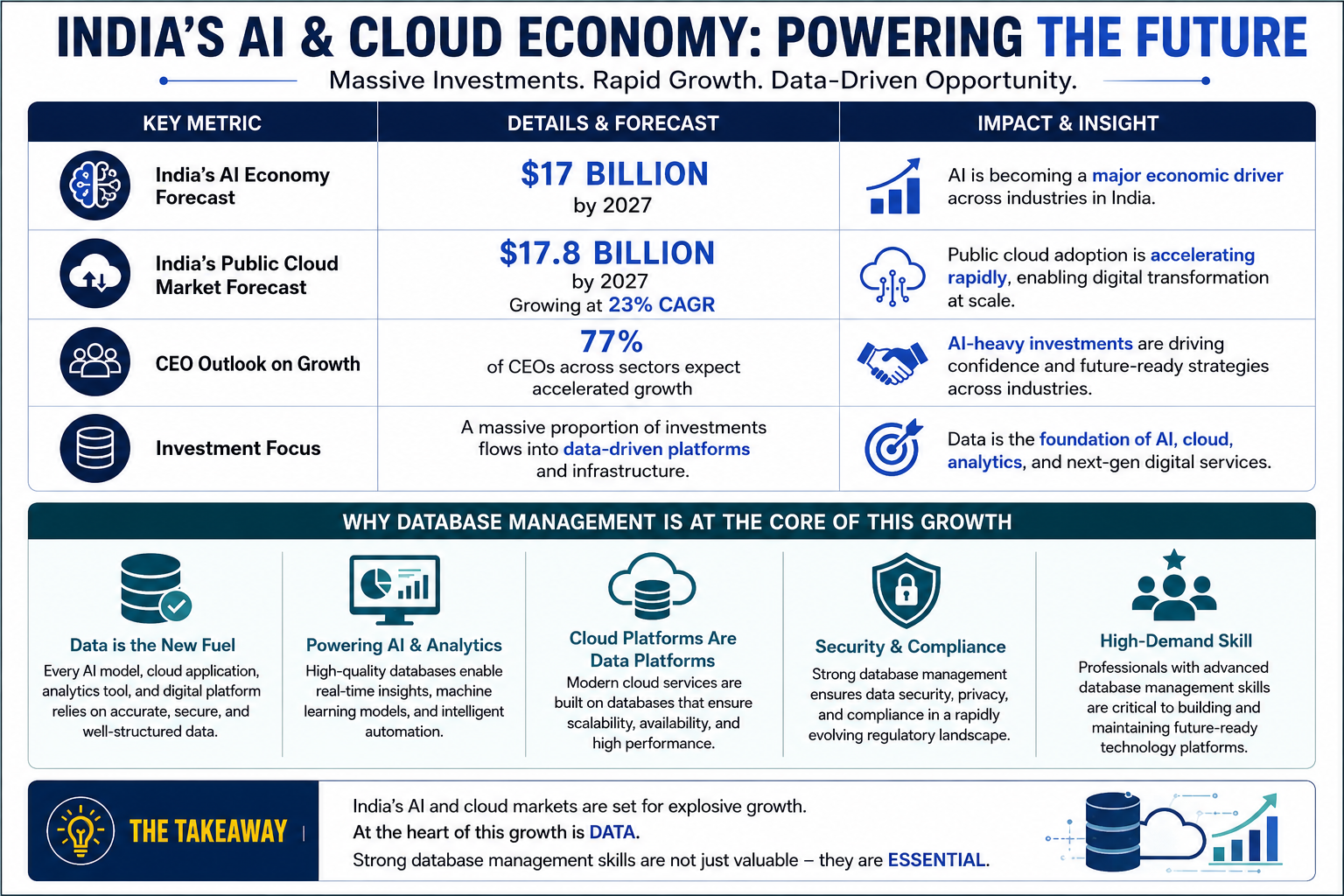
RUNAX Institute’s BCA curriculum includes thorough database management concepts that go beyond basic SQL queries. Students learn how databases support business operations, how they integrate with application layers, and how database intelligence contributes to the overall performance and reliability of modern software ecosystems.
Networking and Digital Connectivity as Foundations of Smart Systems
You can write the most brilliant application in the world, but if it cannot communicate reliably with other systems, it is essentially useless in a modern enterprise environment. Networking is the circulatory system of intelligent software ecosystems, and understanding it is increasingly essential for every technology professional, not just network specialists.
92 per cent of enterprises now run workloads across two or more cloud providers, and 85 per cent of companies completed their cloud-first transitions by the end of 2025, reflecting how deeply multi-cloud networking has become an operational standard across industries. Cloud-native architectures depend entirely on reliable, secure network communication between services, containers, APIs, and external platforms. A BCA graduate who understands networking principles carries a significant professional advantage in any cloud-focused technology role.
The BCA course in Kolkata at RUNAX Institute exposes students to networking fundamentals that form the backbone of modern digital infrastructure. Students learn how devices communicate, how data travels across networks securely, and how networking principles connect directly to the cloud platforms and collaborative coding frameworks that define contemporary software development. This knowledge does not just support technical roles. It builds the systems-level thinking that makes technology professionals genuinely indispensable.
Practical Learning and Industry Exposure in Modern Computer Applications Education
Theory without practice is just trivia. In technology education specifically, the gap between knowing something academically and being able to apply it professionally can be the difference between landing your first role confidently and spending months trying to bridge a skills gap on the job.
Why has practical learning become so critical for BCA students in 2025 and beyond?
Because employers hiring fresh technology graduates are no longer patient about onboarding gaps. They want graduates who can contribute to real projects quickly, understand professional development workflows, and adapt to the tools and platforms their teams actually use.
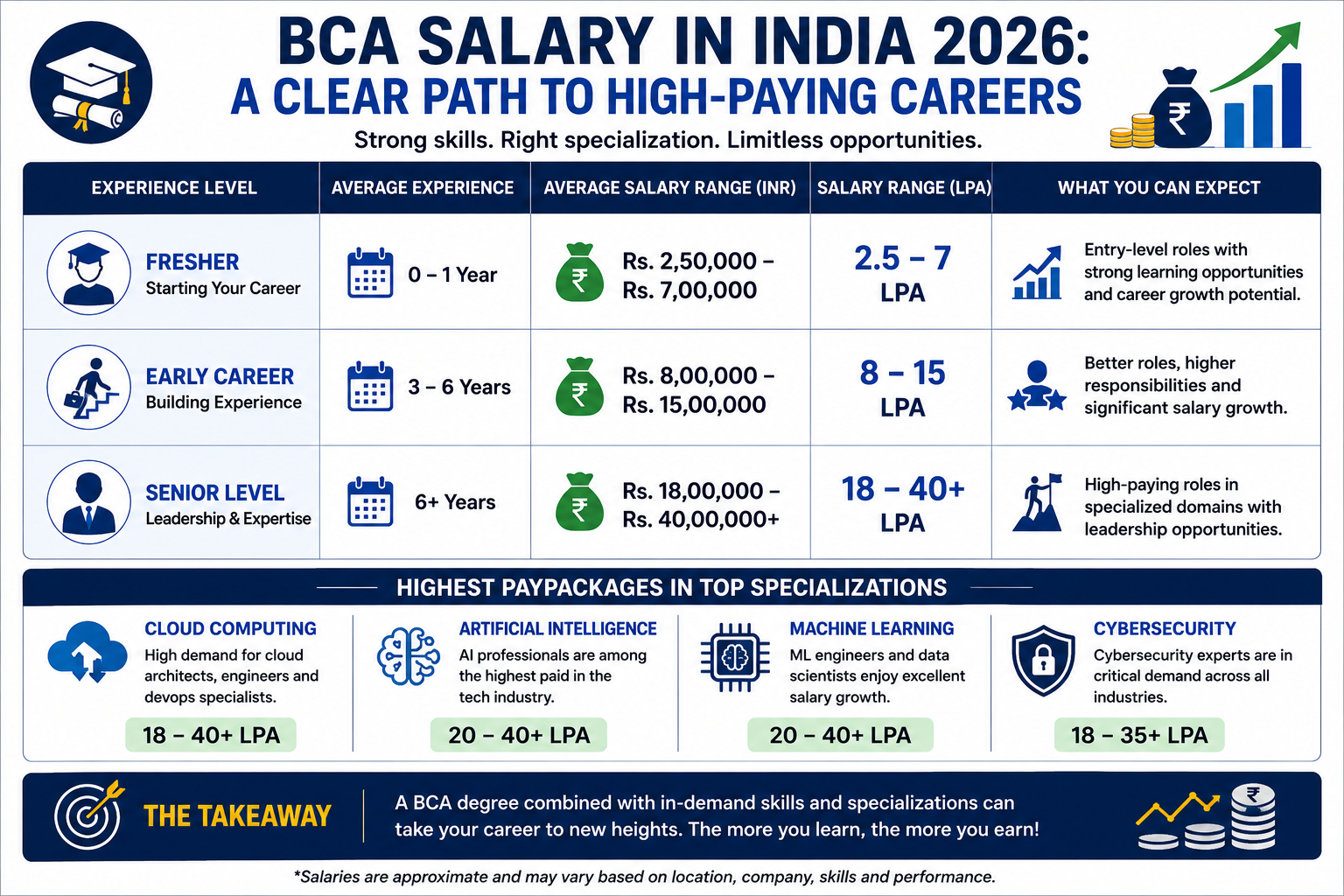
The students who reach the higher end of the fresher range are invariably those who combine strong foundational knowledge with genuine hands-on experience gained during their academic programs.
RUNAX Institute promotes project-based learning, workshop-driven skill development, and real-world technology exposure that connects academic content directly to professional practice. Students do not just read about cloud-native applications or software lifecycle management. They engage with these concepts through practical activities that simulate real development environments and industry workflows.
Building Future-Ready Technology Professionals Through BCA Education
The technology landscape of 2030 will look substantially different from what it looks like today. AI integration, edge computing, and increasingly autonomous software systems will redefine what technology professionals do and what skills they genuinely need. The BCA graduates who will thrive in this environment are not those who memorised the most programming syntax. They are those who learned to think systemically about technology, adapt to new tools quickly, and contribute meaningfully to complex digital environments.
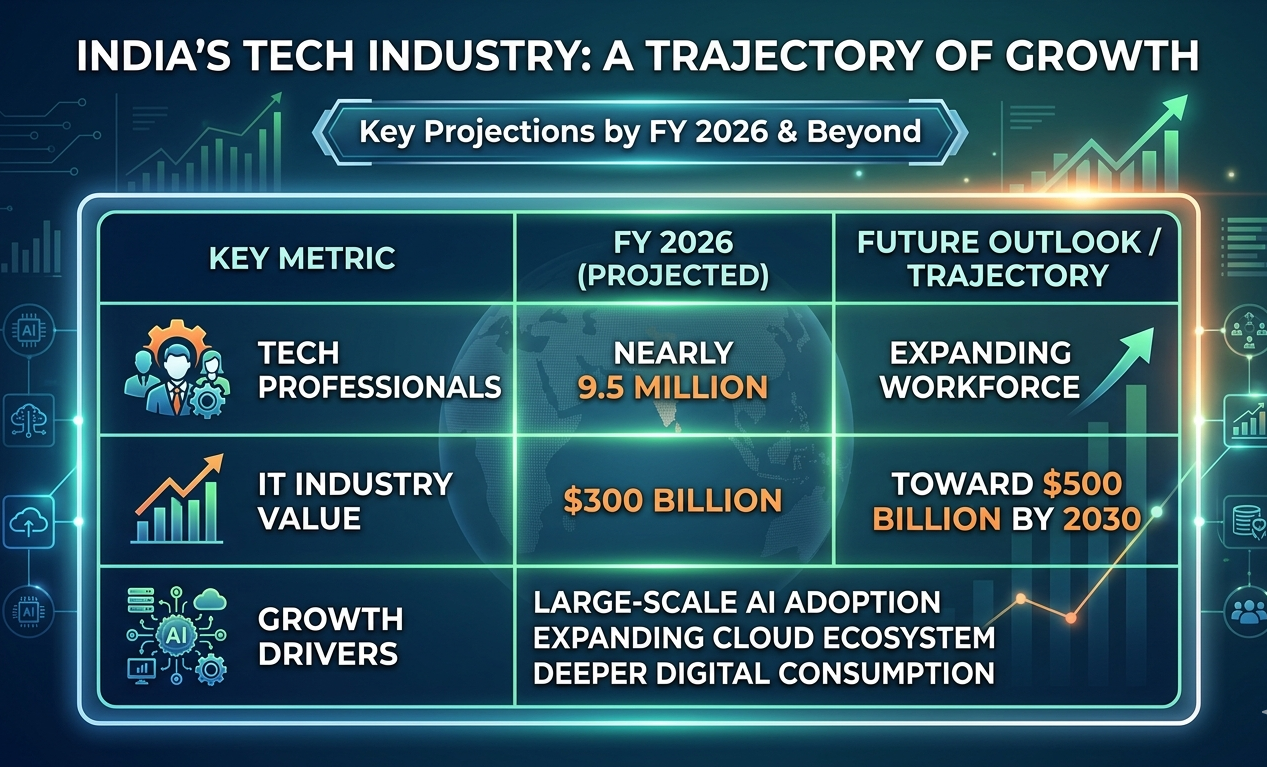
These numbers create an extraordinary opportunity for Indian technology graduates, and specifically for students in Kolkata pursuing structured, industry-aligned computer applications programs that develop both technical depth and professional adaptability.
RUNAX Institute positions itself as an institution committed to developing genuinely future-ready graduates. The institute’s approach to BCA education blends programming fundamentals with ecosystem-level technology understanding, collaborative development exposure, and the kind of analytical thinking that allows professionals to grow with technological change rather than be overwhelmed by it.
Conclusion
Intelligent software ecosystems are not the future of technology. They are the present reality that every professional entering the technology sector must understand and navigate with confidence. Software development, database management, networking, cloud architecture, and system integration are no longer separate disciplines. They are deeply interconnected competencies that define what it means to be a capable, employable, and genuinely valuable technology professional in 2025 and beyond.
India’s white-collar IT job market posted its strongest February performance in recent years in 2026, with AI and ML hiring rising 40 per cent year on year and fresher hiring in the IT sector growing 8 per cent, reflecting that entry-level demand for technically skilled graduates remains firmly strong.
A BCA course in Kolkata at RUNAX Institute equips students with the technical knowledge, practical skills, and industry awareness they need to thrive within modern software ecosystems. The institute prepares graduates who do not just know how to code. They understand how technology systems think, connect, and scale, and that understanding is what builds lasting, successful careers in India’s booming information technology sector.
Frequently Asked Questions
1. What is an intelligent software ecosystem in the context of BCA education?
An intelligent software ecosystem is a network of interconnected platforms, databases, cloud services, and automation tools that work together, forming the foundation of modern technology environments every BCA student must learn to navigate.
2. Why should students choose a BCA course in Kolkata over other technology programs?
A BCA course in Kolkata offers strong foundational computing education combined with practical exposure to modern software technologies, preparing graduates for diverse IT roles across India’s rapidly growing technology sector.
3. What career opportunities are available to BCA graduates in India’s IT sector?
Fresh salaries range from Rs. 2.5 LPA to Rs. 7 LPA and substantial growth potential, BCA graduates can work in software development, database administration, cloud support, systems analysis, and IT consulting.
4. How does practical learning improve a BCA student’s career readiness?
Practical learning through project-based activities, workshops, and real-world technology exposure helps students apply theoretical knowledge professionally, making them immediately valuable to employers and significantly improving placement outcomes.
5. How does the RUNAX Institute prepare BCA students for modern software ecosystems?
RUNAX Institute combines programming fundamentals, database management, networking principles, and ecosystem-level technology knowledge with practical learning experiences that build both technical competency and professional adaptability.