






Introduction
You love food. You dream of creating dishes that people remember. But here’s the hard truth. Taste alone does not build a successful culinary career. Money management does. Restaurants shut down every year, not because the food tastes bad, but because costs spiral out of control. Rising ingredient prices, unpredictable demand, and tight competition make survival tough in India’s food industry.
This is exactly where the best culinary management course in Kolkata changes the game. It teaches you how to cook with precision and think like a business strategist. You learn how to price dishes, manage inventory, reduce waste, and protect profit margins without compromising quality.
Ignore cost engineering, and you risk running a kitchen that leaks money daily. Master it, and you gain control over every rupee you spend and earn. This guide shows you how modern culinary management courses in Kolkata train you to balance taste with profitability, building a sustainable career in the hospitality industry.
Why Cost Engineering Defines Culinary Success Today
The food industry in India operates on razor-thin margins. Reports suggest that average restaurant profit margins in India range between 5% to 15%. That leaves no room for error. Every extra gram of ingredient, every wasted portion, and every mispriced dish eats into profit.
The best culinary institute in Kolkata understands this pressure. It trains you to think beyond recipes. You learn to evaluate the cost of each ingredient before you even start cooking. You learn how customer expectations affect pricing decisions. You understand how small cost leaks can destroy profitability over time.
Modern culinary management courses in Kolkata treat kitchens like business units. You measure performance through numbers, not just taste. You track food cost percentages, monitor waste levels, and adjust pricing strategies based on market demand.
This approach turns you into a professional who understands both culinary arts and business survival. That combination defines success in today’s competitive hospitality space.
Understanding Cost Engineering in Culinary Management Education
Cost engineering in kitchens means you control expenses while maintaining quality. You do not guess costs. You calculate them with precision.
Every serious culinary management college in Kolkata teaches three core financial metrics:
- Food Cost Percentage
- Contribution Margin
- Break-Even Analysis
A standard benchmark shows that food cost percentage should stay between 28% to 35% for most restaurants. If your cost crosses this range, your profits shrink fast.
You learn how to calculate the contribution margin for each dish. This shows how much money a dish actually contributes to covering fixed costs and generating profit.
Break-even analysis helps you understand how many dishes you must sell to cover expenses. This skill plays a key role in restaurant financial planning and long-term sustainability.
Strong culinary business training ensures you do not treat finances as an afterthought. You treat them as a core part of kitchen operations management and decision-making.
Ingredient Costing and Standardisation Techniques
Precision starts with ingredients. Every gram matters.
In a professional hotel management culinary course, you learn to calculate the exact cost of each ingredient used in a dish. You do not rely on rough estimates. You build standard recipes with fixed measurements.
Yield testing becomes a critical skill. You learn how much usable product remains after trimming, peeling, or cooking. For example, a 1 kg raw chicken may yield only 650 grams of usable meat. Ignoring this difference leads to incorrect pricing.
Portion control systems ensure consistency. Each dish served must match the defined quantity. This improves customer experience and prevents over-serving.
Standardisation reduces wastage significantly. Studies show that restaurants implementing strict portion control reduce food waste by up to 20%.
These methods form the backbone of food production cost management and improve accuracy in kitchen cost analysis.
Menu Engineering: Designing Profit-Oriented Food Offerings
Menu design is not just about creativity. It is about profitability.
In a structured culinary management course in Kolkata, you learn menu engineering techniques that categorise dishes into four groups:
- Stars: High profit, high demand
- Plowhorses: Low profit, high demand
- Puzzles: High profit, low demand
- Dogs: Low profit, low demand
This classification helps you decide what to promote and what to remove.
An effective menu pricing strategy ensures that high-margin dishes get visibility. You use placement, descriptions, and pricing psychology to influence customer choices.
Research shows that strategic menu design can increase restaurant revenue by up to 15%.
You also study customer behaviour patterns. You learn what drives ordering decisions and how pricing impacts perceived value. This strengthens restaurant revenue management and improves overall performance.
Inventory Management and Waste Control in Professional Kitchens
Inventory control directly impacts profitability. Poor inventory management leads to overstocking, spoilage, and unnecessary losses.
In professional training, you learn FIFO. First In, First Out ensures older stock gets used before new stock. This reduces spoilage.
You also learn how to track stock levels accurately. Digital tools help monitor usage patterns and predict demand.
Food waste is a major concern in India. Reports indicate that restaurants waste up to 10% to 15% of purchased food. Effective inventory control in kitchens reduces this waste significantly.
Waste tracking systems help identify problem areas. You learn to analyse why waste occurs and fix the root cause.
Strong food service cost optimisation depends on disciplined inventory practices and continuous monitoring.
Pricing Strategies and Revenue Optimisation in Culinary Businesses
Pricing is where art meets science.
You learn multiple pricing models in culinary entrepreneurship training:
- Cost-plus pricing
- Competitive pricing
- Value-based pricing
Cost-plus pricing ensures you cover expenses and add a margin. Competitive pricing helps you stay relevant in the market. Value-based pricing concentrates on what consumers are prepared to spend.
You also learn how psychological pricing works. For example, pricing a dish at 299 instead of 300 influences customer perception.
Effective restaurant profit management depends on balancing cost recovery with customer expectations.
Data shows that restaurants using structured pricing strategies improve profit margins by up to 10%.
This skill plays a key role in food and beverage cost control and long-term financial stability.
Role of Technology in Culinary Cost Management
Technology has transformed kitchen management.
Modern culinary institutes with placement programs train you to use software tools for cost tracking and analysis. These tools monitor sales, track inventory, and calculate food costs in real time.
You reduce manual errors and improve accuracy. You also gain faster insights into business performance.
Digital systems help forecast demand based on historical data. This improves purchasing decisions and reduces waste.
Cloud-based POS systems provide detailed reports on sales trends and customer preferences. This supports smarter restaurant revenue management decisions.
Technology makes cost control more efficient and scalable.
Supply Chain Coordination and Vendor Management
Your supply chain determines your cost structure.
You learn how to source ingredients at the best price without compromising quality. Negotiating with vendors becomes essential.
Bulk purchasing helps reduce costs, but it requires proper storage and planning. You learn how to balance quantity with shelf life.
Strong vendor relationships ensure consistent supply and better pricing. Reliable suppliers reduce operational disruptions.
Efficient procurement strategies improve hospitality cost management and ensure stability in kitchen operations.
You also learn quality control checks to maintain consistency in food output.
Balancing Quality and Cost: The Core Challenge in Culinary Training
Every chef faces one critical challenge. Maintain quality without increasing costs.
You learn how to substitute expensive ingredients with cost-effective alternatives without affecting taste. You optimise recipes to reduce unnecessary components.
You focus on value engineering. This means delivering maximum value at minimum cost.
Customer satisfaction remains the priority. You do not compromise on taste, presentation, or hygiene.
This balance defines success in professional chef training and real-world kitchen environments.
Real-World Training and Industry Exposure
Theory alone does not prepare you for real kitchens.
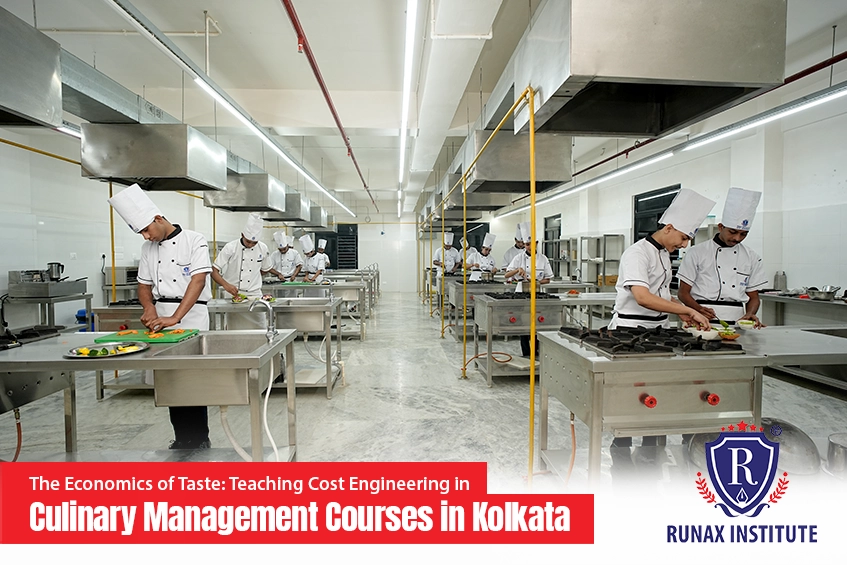
Hands-on training plays a key role in building confidence. You work in simulated kitchen environments where you apply cost control techniques in real time.
Live projects help you understand actual business challenges. You learn how to handle fluctuating demand, supplier delays, and cost variations.
Industry exposure gives you insights into real market conditions. You see how successful restaurants manage costs and maintain profitability.
This practical approach strengthens your understanding of kitchen operations management and prepares you for real-world challenges.
Career Scope: Why Cost Engineering Skills Are in High Demand
Employers look for professionals who understand both cooking and business.
With strong cost engineering skills, you can work as:
- Kitchen Manager
- Food and Beverage Controller
- Restaurant Operations Manager
- Culinary Entrepreneur
The Indian food service market is expected to grow at a CAGR of over 10% in the coming years. This growth increases demand for skilled professionals.
Financial expertise gives you an edge. It improves your decision-making ability and increases your value in the job market.
Graduates from top culinary management colleges in Kolkata gain strong placement opportunities due to their practical knowledge.
Building Profit-Focused Culinary Leaders in Kolkata
Culinary education today focuses on more than cooking. It focuses on building leaders who understand the economics of food.
Structured training in costing, pricing, and operations prepares you to handle real business challenges. You learn to make decisions based on data, not guesswork.
The best culinary management course in Kolkata builds professionals who can manage both kitchens and budgets effectively.
You develop a mindset that values efficiency, precision, and profitability. This mindset defines long-term success in the hospitality industry.
Conclusion
Success in the culinary world depends on more than creativity. It depends on control. You must control costs, manage resources, and make smart financial decisions every day. Restaurants fail when they ignore numbers. They succeed when they balance taste with economics.
A structured culinary management course in Kolkata gives you this balance. You learn how to calculate food costs, design profitable menus, manage inventory, and optimise pricing. You understand how small improvements in cost control can lead to significant profit growth.
India’s food industry continues to grow, but competition keeps increasing. Only professionals with strong financial awareness will stand out. You must think like a chef and act like a business manager.
Master cost engineering, and you gain the power to build sustainable culinary careers. Ignore it, and even the best dishes may fail to keep your business alive.
Start Your Journey Towards a Profitable Culinary Career
You can cook. Now learn how to earn from it.
Choose a program that teaches you real-world food cost control techniques, restaurant profit management, and kitchen cost analysis. Build skills that employers value and businesses need.
Take the next step toward becoming a culinary professional who understands both taste and finance. Enrol in a structured program that prepares you for real challenges and long-term success.
Your future in the food industry depends on the decisions you make today. Make them count.
Frequently Asked Questions
1. What is cost engineering in culinary management?
Cost engineering focuses on managing food costs, pricing, and profitability in kitchens. It helps chefs control expenses, reduce waste, and ensure sustainable business operations.
2. Why is the food cost percentage important in restaurants?
Food cost percentage shows how much you spend on ingredients compared to revenue. Maintaining it between 28% to 35% helps ensure profitability and financial stability.
3. How do culinary courses teach menu pricing strategies?
Courses teach cost-based pricing, competitor analysis, and customer behaviour insights. Students learn to price dishes to cover costs while maximising profit margins.
4. What role does inventory management play in kitchens?
Inventory management reduces waste, prevents overstocking, and ensures ingredient availability. It directly improves profit margins and operational efficiency.
5. Are cost engineering skills useful for culinary careers?
Yes. These skills increase employability and prepare you for roles like kitchen manager and restaurant operator. They help you make data-driven decisions in real business environments.