




Introduction
If you still think a hotel management course only trains you to smile at the front desk and memorise room service codes, reality is about to humble that thought. The hotel industry is changing fast, and India sits right at the centre of this transformation. Hotel brands are scaling aggressively, guest expectations are getting smarter, and technology is no longer a “nice-to-have.” It is survival gear.
India’s hospitality sector already contributes over 7% to national employment, and industry projections suggest the sector could create over 12 million new jobs by 2030. Now add large-scale expansion plans into the mix. Eight Continents’ roadmap to open 50 hotels by 2030 signals one loud truth. Growth will demand people who understand hospitality and technology equally well.
Here is the real problem. Many hospitality aspirants still chase outdated skill sets. They risk becoming irrelevant in a world powered by AI in hotel operations, automation, and data-driven decisions. Hotels no longer need only manpower. They need mindpower.
If you keep reading, you will understand how AI, automation, cloud systems, and smart technologies reshape hotel jobs, redefine career paths, and turn a modern hotel management course syllabus into a passport for future-ready careers. And yes, the opportunities are massive.
AI in Everyday Operations: Transforming How Hotels Run
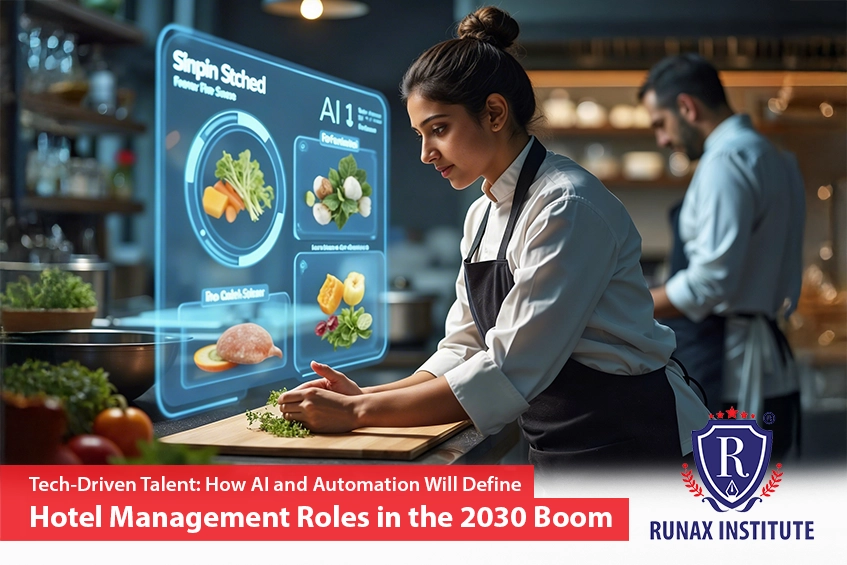
AI already runs silently behind the scenes in many Indian hotels. Guests may not see it, but hotel managers feel its impact every hour. Contactless hotel check-in kiosks reduce queues. AI chatbots handle booking queries in multiple Indian languages, 24 hours a day. Hotels using these tools report up to 30% faster response times and higher guest satisfaction scores.
Revenue teams now rely on digital revenue management systems powered by machine learning. These systems analyse booking patterns, local demand, weather trends, and events to adjust room prices in real time. According to industry data, hotels using AI-driven pricing tools achieve revenue uplifts of 8 to 12% annually.
AI also supports predictive maintenance in hotels. Smart sensors detect equipment stress before breakdowns occur. This approach cuts maintenance costs by nearly 20% and prevents guest complaints. The workforce evolves with it. Staff members shift from manual checks to system monitoring and decision-making roles.
This shift explains why modern hotel roles require comfort with dashboards, analytics, and hotel automation tools, rather than relying solely on operational routines.
New Skill Sets on the Block: Beyond Traditional Hospitality Training
The modern hotel management course syllabus looks nothing like it did ten years ago. Housekeeping and food production still matter, but they no longer dominate the curriculum. Institutes now teach cloud platforms, CRM tools, cybersecurity basics, and cloud-based property management systems.
Students learn how AI for guest personalisation tailors room preferences, dining suggestions, and loyalty offers. Data skills now matter as much as service etiquette. Graduates with hospitality data analytics training understand guest behaviour patterns and convert insights into revenue strategies.
Indian hospitality education increasingly integrates hospitality technology certification modules. These certifications expose students to IoT, smart room controls, and automation workflows. Industry surveys show that hotels prefer candidates with technology exposure, even for entry-level roles.
This shift proves one thing. A future-focused hotel management course trains professionals to manage systems, not just staff. That difference decides career speed and salary growth in the coming decade.
The Rise of Hybrid Roles: Where Tech and Hospitality Collide
Ten years ago, hotels hired managers, chefs, and supervisors. Today, they hire problem solvers who speak both hospitality and technology. Expansion plans like Eight Continents’ demand standardised systems across properties without killing personal service. Hybrid roles make this balance possible.
Hotels now employ AI guest experience designers who map digital touchpoints across the guest journey. Automation coordinators oversee robotic process automation in hotels for billing, inventory, and reporting. In terms of predictive analytics in hospitality, managers interpret data trends to guide staffing and promotions.
Revenue architects combine hospitality knowledge with hotel revenue optimisation software. They work closely with AI tools but make final strategic calls. These roles did not exist earlier. They now define competitive advantage.
As hotel networks scale across India, hybrid professionals ensure consistent quality while adapting to local guest behaviour. This blend of skills makes them indispensable and highly paid.
Upskilling for the Future: Education, Training and Career Pathways
The hospitality industry no longer rewards passive learning. Professionals must upskill constantly to stay relevant. Aspiring managers pursue short-term certifications in AI, analytics, and hospitality digital transformation alongside their core degrees.
Internships with tech-driven hotels expose students to real-world smart rooms and IoT hotel systems. Cross-functional training helps them collaborate with IT teams and operations managers smoothly. Hotels value professionals who understand workflows across departments.
India’s hospitality growth spreads beyond metros. Tier-II and Tier-III cities now attract premium hotel investments. This expansion creates demand for trained professionals willing to adapt quickly. Reports suggest that hotels adopting automation require 15 to 20% more skilled staff in analytics and systems management roles.
For students, the message stays clear. Continuous learning transforms a hotel management course into a long-term career asset rather than a one-time qualification.
Operational Automation: Redefining the Workforce Landscape
Automation does not eliminate jobs. It redesigns them. Hotels automate repetitive processes like billing, inventory tracking, and scheduling using hotel automation tools. This shift frees staff to focus on guest engagement and strategic tasks.
Front desk executives evolve into guest technology facilitators who assist with digital check-ins and service apps. Housekeeping supervisors monitor robotic cleaners and IoT dashboards instead of manual checklists. Revenue teams rely on AI insights but retain decision authority.
Industry data shows automation improves operational efficiency by nearly 25% while improving employee satisfaction. Staff spend less time on routine work and more time on creative problem-solving.
In India’s ever-expanding hospitality market, automation acts as a growth enabler. It allows hotels to scale without compromising service quality. The workforce evolves with smarter roles and higher accountability.
Data Ethics, Privacy and Human Roles in a Tech-Driven Hotel World
Technology brings responsibility. Hotels collect vast amounts of guest data through apps, loyalty programs, and smart systems. Ethical data handling now defines brand trust. Managers must understand consent, data security, and bias prevention.
AI systems must treat all guests fairly. Biased algorithms can damage reputation and revenue. Hospitality leaders need governance frameworks that balance innovation with privacy protection. India’s data protection landscape continues to evolve, making compliance a core management skill.
Human judgment remains crucial. AI supports decisions, but managers validate outcomes. Ethical leadership separates successful hotels from risky experiments.
Professionals trained through advanced hotel management course programs understand this balance. They protect guest trust while leveraging technology responsibly. This ability defines leadership credibility in a tech-first hospitality era.
Future Outlook – A Tech-Forward Workforce for the 2030 Hospitality Boom
The road to 2030 looks clear. Hotels will expand aggressively. Guest expectations will rise sharply. Technology will drive every major decision. Eight Continents’ plan to scale to 50 hotels symbolises this new reality. Growth will not rely solely on headcount. It will rely on smart talent.
The future of hospitality demands professionals who blend service excellence with system intelligence. AI, automation, IoT, and analytics redefine hotel roles across departments. Front desks turn digital. Revenue becomes algorithm-driven. Maintenance turns predictive. Careers become multidimensional.
A modern hotel management course prepares aspirants for this reality. It builds thinkers, analysts, and leaders, not just operators. India’s hospitality renaissance will reward those who adapt early. As such, a future-ready hotel management institute offers more than classroom theory. It delivers exposure to AI in hotel operations, analytics, automation workflows, and cloud systems. This preparation opens doors to high-growth roles across hospitality, culinary, aviation, healthcare, and business management sectors.
The message stays simple. Technology does not replace hospitality. It amplifies it. Professionals who master both will define the next decade of hotel management success.
A flourishing career in Hotels and Hospitality? Enrol in RUNAX Institute’s Hotel Management Course.
The hospitality industry no longer runs on instinct alone. It runs on intelligence, automation, and data-backed decisions. AI-driven systems already influence pricing, staffing, guest engagement, and maintenance. Hotels expanding across India need professionals who understand this shift deeply.
If a flourishing career in Hotels and Hospitality is your dream, it’s the right time to enrol in RUNAX Institute’s Hotel Management Course. The institute offers industry-aligned programs in hospitality management, culinary management, hospital management, aviation management, BCA, and BBA courses. Its curriculum focuses on real-world skills, practical exposure, analytics, automation workflows, and cloud systems, along with modern technology adoption.
RUNAX Institute stands among the best hotel management institute choices in Kolkata due to its career-focused approach and its bold “Guaranteed Job Letter on Admission” commitment. If you want stability, growth, and future-proof skills, this is where ambition stands in collaboration with the right opportunity.
Frequently Asked Questions
1. How does a modern hotel management course prepare students for AI-driven hotels?
A modern hotel management course integrates technology modules, analytics training, and automation exposure alongside core hospitality subjects, ensuring students understand real-world hotel systems and workflows.
2. Will AI reduce hotel jobs in the future?
AI reshapes jobs rather than removing them. Hotels need skilled professionals to manage systems, analyse data, and enhance guest experiences alongside technology.
3. Are hospitality technology certifications important for career growth?
Yes. Hospitality technology certification improves employability, salary potential, and readiness for leadership roles in tech-enabled hotels.
4. What new roles emerge due to automation in hotels?
New roles include analytics managers, automation coordinators, digital revenue specialists, and guest experience designers who blend hospitality knowledge with technology skills.
5. Why is now the right time to pursue a hotel management course?
Hotel expansion, workforce automation in hospitality, and technology adoption create strong demand for skilled professionals. Early preparation offers long-term career stability and faster growth.